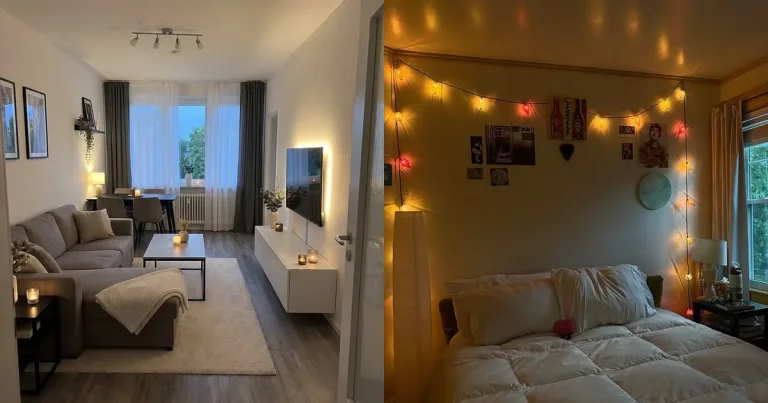
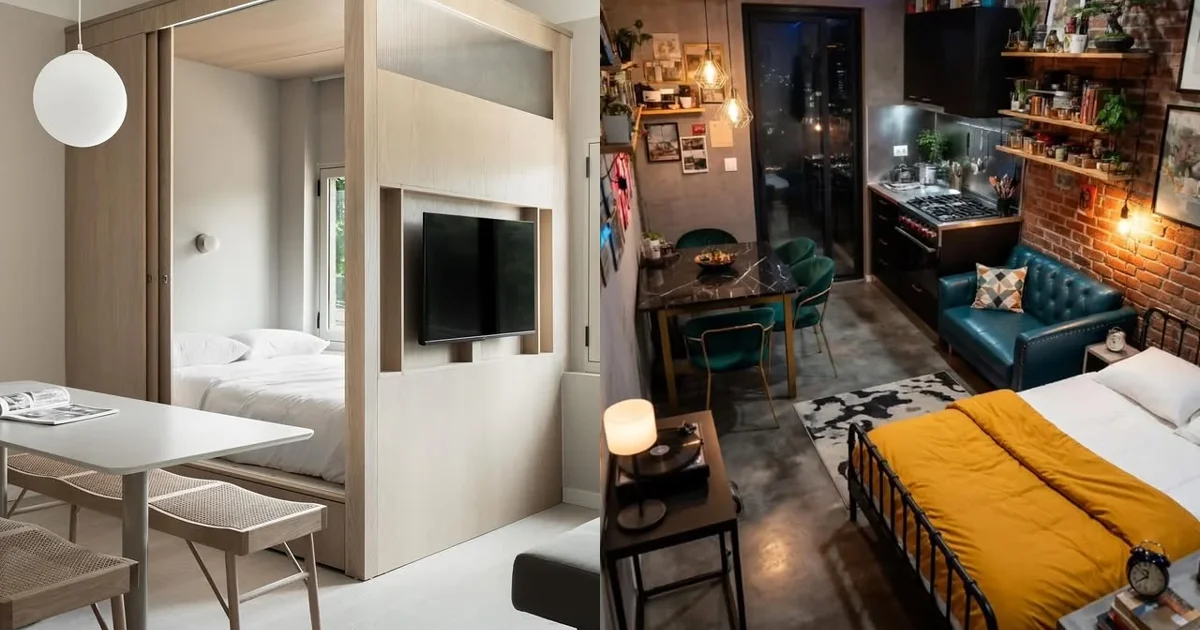
25 Clever Studio Apartment Ideas for a Stylish Home
A studio apartment asks one room to do the work of four, and the best ones make it look easy. These 25 clever studio apartment ideas show how smart zoning, furniture that earns its floor space, and a few warm details can turn a single open room into a home that feels calm, not cramped.
Each idea works on its own, so you can start with one change or layer several together. Most cost little more than a shelf, a screen, or a better lamp, and none of them need a bigger apartment.
Smart Zoning Basics
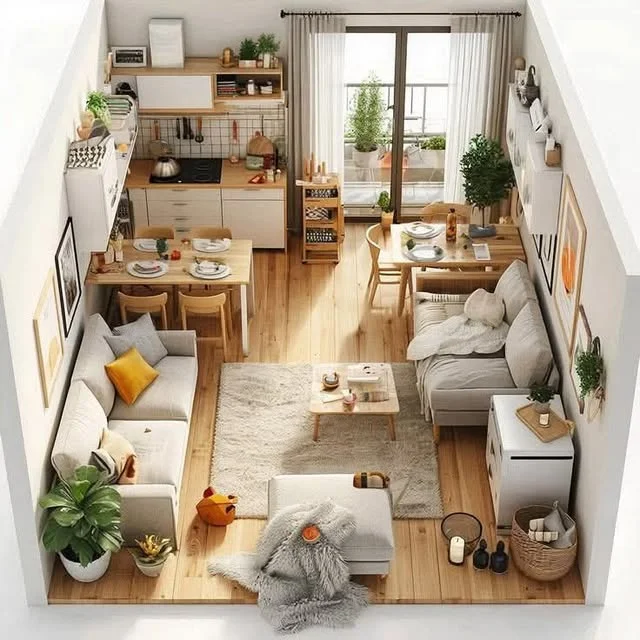
Zoning is the first skill of studio living. Without walls, the room needs clear signals that say where sleeping ends and living begins, and the signals can be as simple as a rug, a shelf, or a change in light.
- Place a rug under the sofa to mark the living zone, and a second smaller rug by the bed.
- Turn the sofa so its back faces the bed, creating a soft wall between the two zones.
- Use one floor lamp in each zone so the light itself draws the map.
- Keep walkways clear and at least 60 centimeters wide so zones never feel blocked.
A good zone plan also makes cleaning easier, since every object has a home inside one zone. Start with the bed and the sofa, then let the smaller zones fall into place around them.
Sofa Bed Solutions
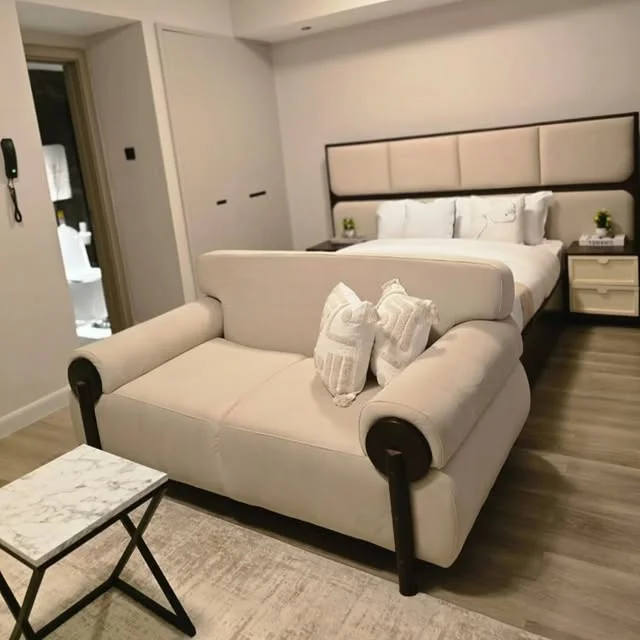
A sofa bed is the classic studio compromise, and the modern versions are far better than the lumpy pullouts of the past. The trick is choosing one you would actually sit on every day, not just sleep on once a month.
- Test the seat depth before you buy, since a deep sofa bed doubles as a lounge chair.
- Pick a washable slipcover so the piece that gets used most is the easiest to clean.
- Store the bedding in the sofa base or a nearby ottoman so the changeover takes two minutes.
- Add a slim side table that moves with the bed, so the nightstand never gets lost.
If a full sofa bed feels too big, a daybed with a trundle does the same job in a smaller footprint, and it reads as a sofa all day long.
Room Divider Tricks
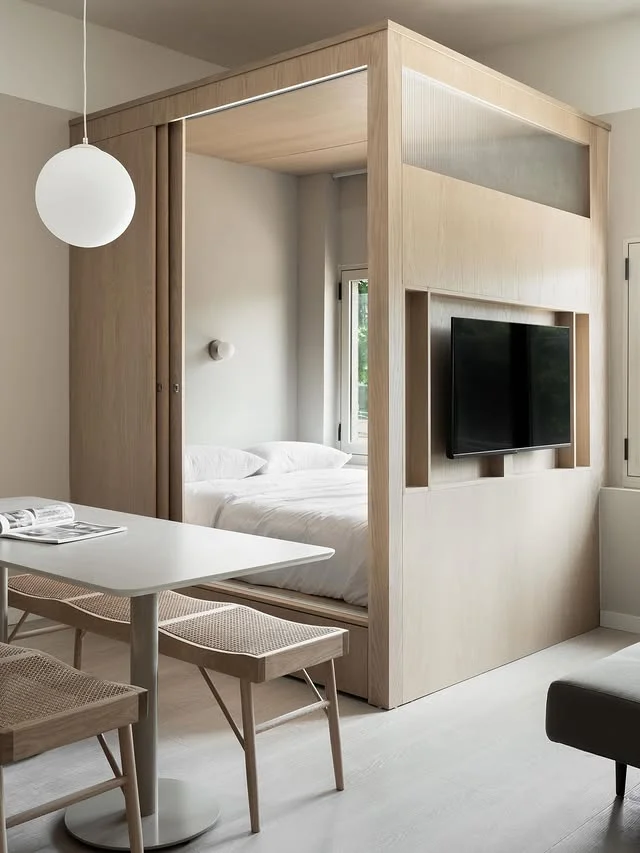
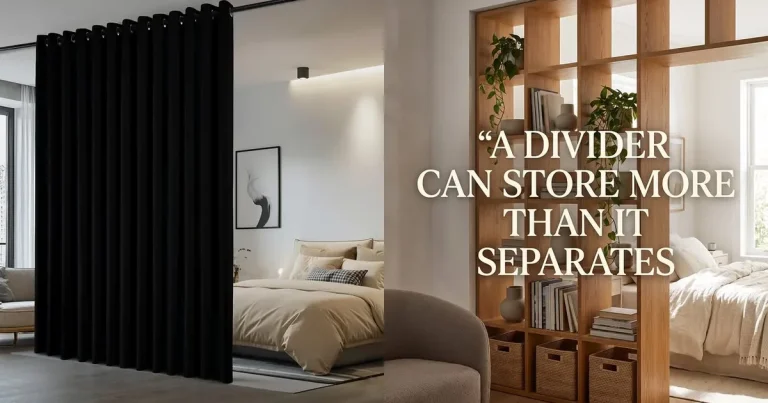
A divider is the fastest way to give a studio a bedroom without building a wall. Open shelves, slatted panels, and folding screens all divide the room while letting light and air through.
DO:
- Choose a divider you can see through in part, so the room never feels boxed in.
- Match the divider height to the ceiling, leaving a gap at the top for light.
- Use the divider as storage, with shelves facing the living side.
DON’T:
- Block the only window with a solid panel, the room will go dark.
- Use a divider so wide it eats the walkway, it will annoy you daily.
The best dividers do two jobs at once, and a bookshelf divider is the classic example: it hides the bed and holds the books.
Loft Bed Ideas
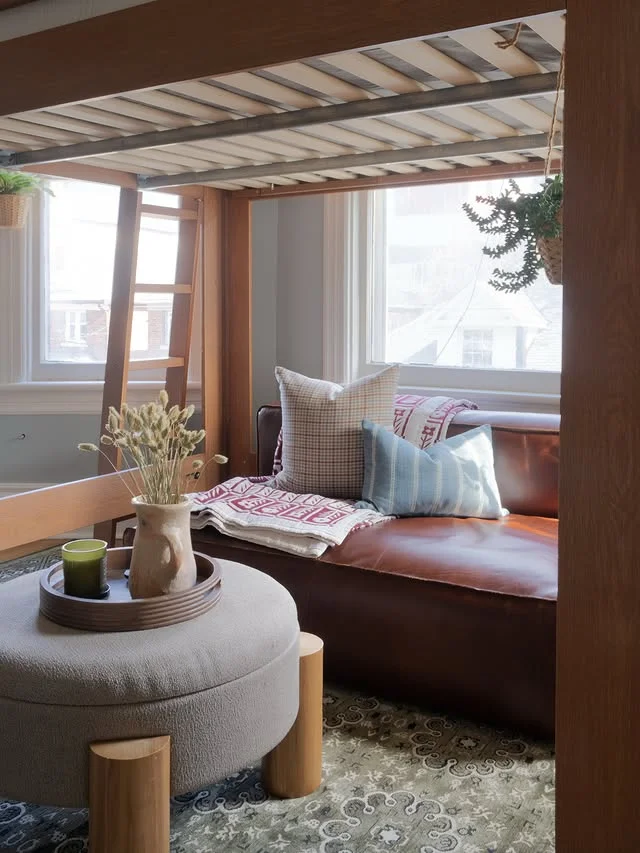
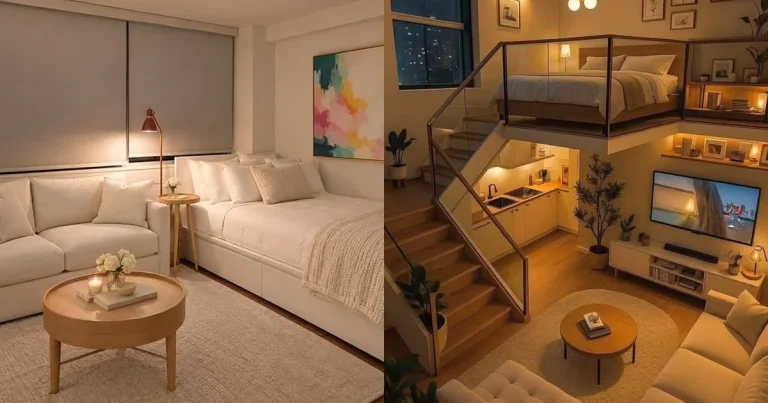
A loft bed frees the whole floor below for living, working, or storage, and it suits studios with high ceilings best. The space under the bed can hold a desk, a sofa, or a wardrobe, which is like gaining a second room for the price of a ladder.
Quick Tip: Measure the ceiling before you commit: you need at least 90 centimeters of sitting height above the mattress, and a ladder or stair you can climb half asleep.
Loft beds suit single sleepers best, since the climb gets old for two. If the ceiling is low, a mid sleeper with storage drawers below gives most of the benefit without the height.
Hidden Storage Wins
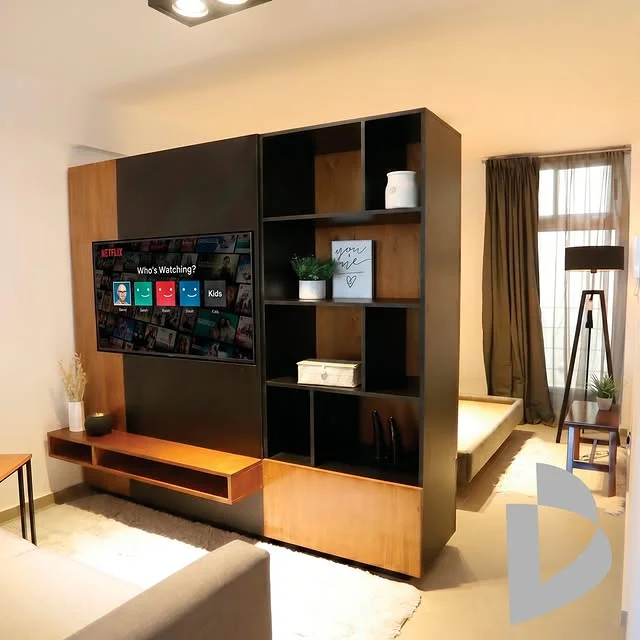
Storage is what keeps a studio from looking like a storage unit. The goal is to hide the everyday clutter behind closed doors and keep only the pretty things on display.
- Use the space under the bed for out of season clothes in flat boxes.
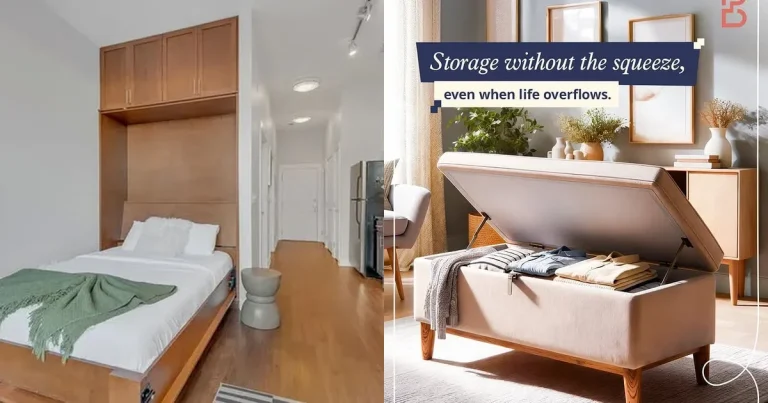
- Pick an ottoman with a lift up lid for blankets, chargers, and board games.
- Hang hooks behind the door for coats, bags, and tomorrow’s outfit.
- Keep one basket per zone for the things that always end up on the floor.
Hidden storage works best when it is easy to reach, since a box you never open becomes a junk drawer. Label the boxes and rotate them with the seasons.
Compact Kitchen Layout
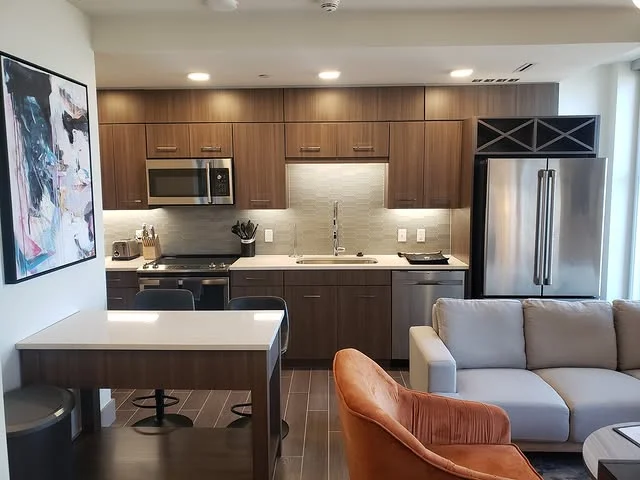
A studio kitchen is usually one wall long, so every centimeter has to earn its place. A clear counter, a good light, and a little open shelving can make a galley kitchen feel like a proper cooking space.
- Keep the counter clear except for the kettle and one chopping board.
- Hang mugs and utensils on a rail to free the cupboards for food.
- Use a fold down table as extra prep space when you cook.
- Add a small rug in front of the sink to warm up the hardest working corner.
If the kitchen has no window, a warm bulb and a pale backsplash keep it from feeling like a cupboard. Cook with the living room light on and the whole space feels bigger.
Tiny Dining Setup
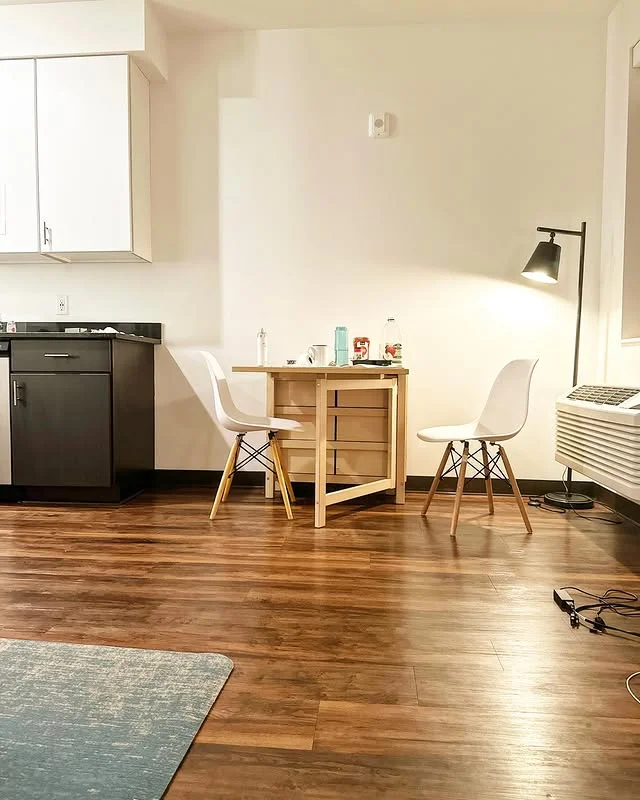
A dining table in a studio has to earn its floor space every day, not just on dinner party nights. The right setup seats two comfortably and folds away when the room needs to breathe.
Before: A fixed four seat table pushed against the wall, with chairs that never move and a surface that collects mail.
After: The same corner with a small round table, two stackable chairs, and a pendant light above, and the corner becomes the room’s dining spot.
A round table suits a studio best, since it has no corners to walk into and seats three in a pinch. Keep the chairs light enough to move with one hand.
Work Nook Design
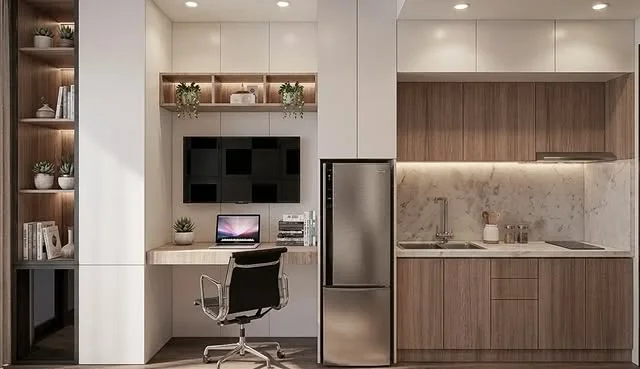
Working from a studio means the office shares a room with the bedroom, so the desk needs a clear edge. A nook with a good chair and a lamp can feel like a real office, even if it is only a meter wide.
DO:
- Face the desk toward the room, not the wall, so work never feels like a punishment.
- Add a shelf above the desk for books and chargers, keeping the surface clear.
- Use a chair you can tuck fully under the desk when the working day ends.
DON’T:
- Put the desk beside the bed, you will answer emails from under the covers.
- Let cables trail across the floor, they turn a nook into a hazard.
When the working day ends, close the laptop and cover the desk with a cloth or a tray. The ritual tells your brain the office is closed.
Plant Filled Corners
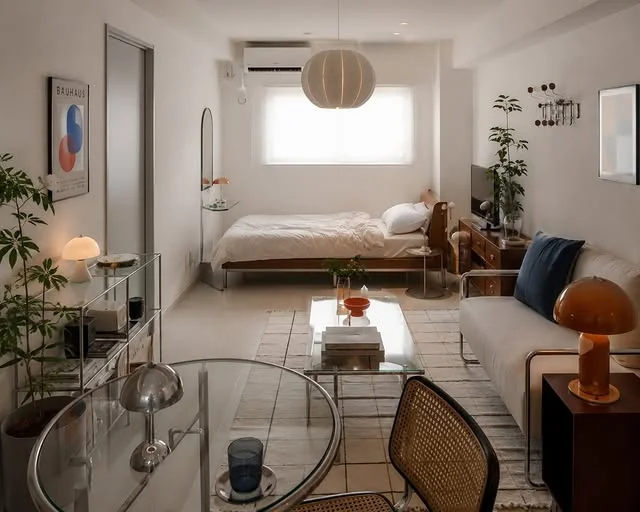
Plants are the easiest color a studio can take. Green against pale walls looks fresh without trying, and a tall plant beside the sofa breaks up the straight lines of the furniture.
- Put the tallest plant in the darkest corner, it needs the least direct light there.
- Use matching pots in one material so the plants read as a set.
- Hang one trailing plant from the ceiling to use the vertical space.
- Water on a schedule, since a dead plant is worse than no plant.
If real plants keep dying, a good faux olive tree does the same job and needs nothing. Start with one large plant and live with it for a month before adding more.
Layered Lighting Plans
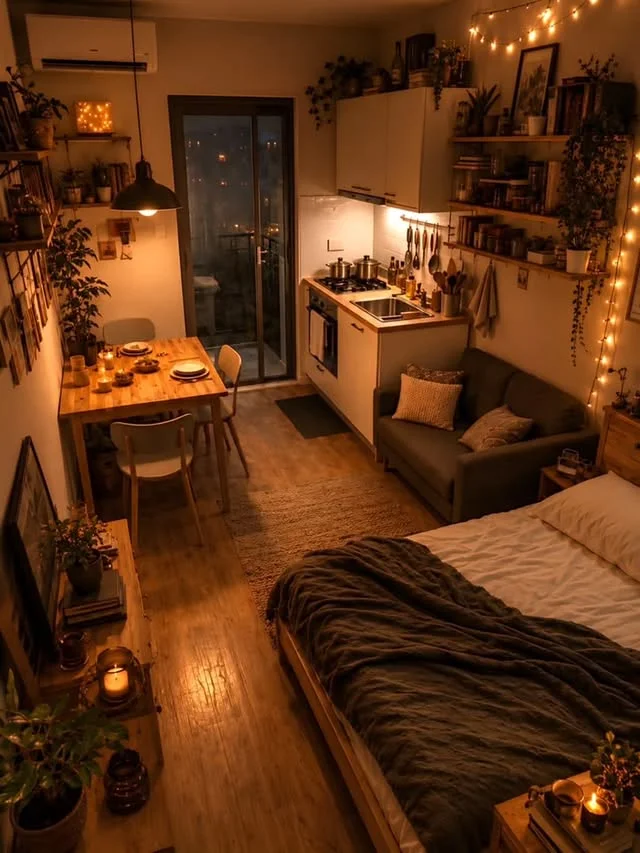
One ceiling light makes a studio feel like a cell. Three layers of light make it feel like a home: a main light, a task light, and a soft glow for the evening.
- Use warm white bulbs, around 2700K, in every fitting.
- Put the main light on a dimmer so the room works day and night.
- Add a floor lamp behind the sofa arm for reading light.
- String fairy lights along a shelf or a mirror for a soft evening glow.
Light is the cheapest way to fix a studio that feels dull. Change the bulbs first, then add one lamp, and only then think about repainting.
Mirror Magic Walls
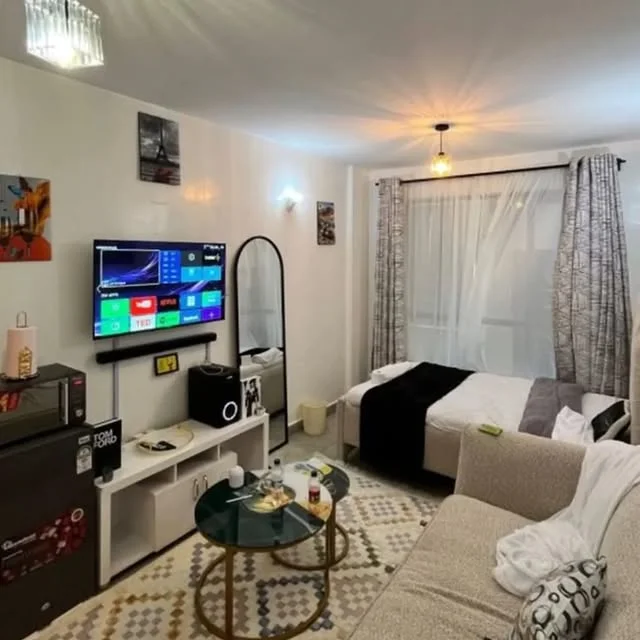
A mirror is the oldest small space trick because it works. It doubles the light, borrows the view from the window, and makes a wall disappear.
Quick Tip: Hang the mirror so it reflects a window or a plant, not a blank wall or the bed. A mirror facing the bed doubles the clutter instead of the light.
One large mirror beats five small ones, since a single clean reflection reads as a window. Lean a tall mirror against the wall if you rent, and it moves with you.
Light Color Palette
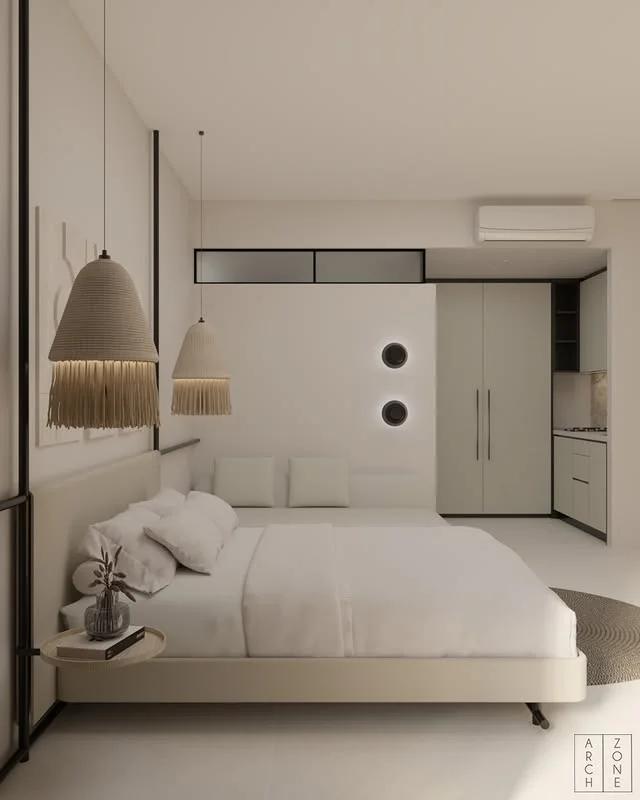
Pale walls are the safest first step in a studio, and they make every other idea on this list easier. White, cream, and pale grey keep the room bright even on cloudy days, and they let the furniture carry the color.
- Paint the ceiling bright white so the room feels taller.
- Use one pale color on all the walls so the space reads as a whole.
- Add color through cushions and art, which are easy to change.
- Keep the floor pale too, since a dark floor shrinks the room.
A light palette does not mean a boring room. Texture does the work instead: linen, wool, rattan, and wood all read clearly against pale walls.
Cozy Textile Layers
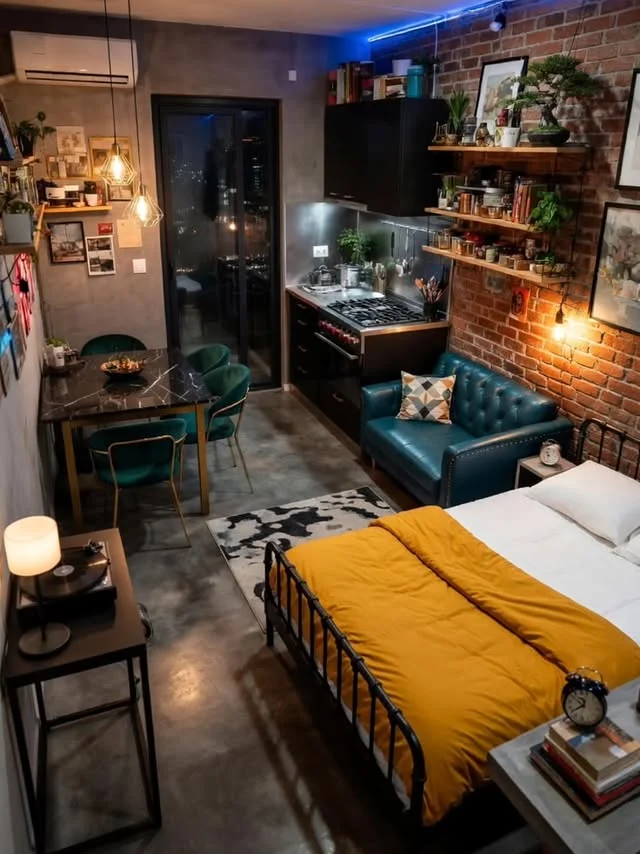
Texture is what stops a small room from feeling flat. A chunky knit throw, a soft rug, and a few good cushions give the eye and the hand something to notice, even when the colors never change.
- Layer a throw over one sofa arm, not the back, so it stays in reach.
- Mix two textures per seat, such as velvet and linen, instead of mixing colors.
- Use a thick rug under the coffee table to anchor the seating area.
- Swap cushion covers with the seasons so the sofa looks new twice a year.
Layered texture suits winter best, when the room needs to feel warm as well as look sharp. Start with the throw and the rug, since those two pieces carry most of the comfort.
Vertical Shelving Storage
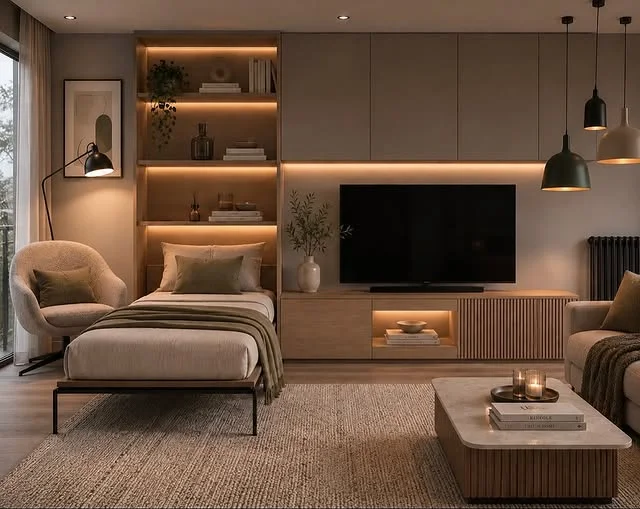
When the floor is full, the walls are the only space left, and tall shelves use it well. A bookshelf wall turns storage into the room’s feature, and it needs no other decoration.
DO:
- Run shelves floor to ceiling so the wall reads as built in.
- Leave a third of each shelf empty so the display can breathe.
- Put the heaviest items low and the lightest ones high.
DON’T:
- Fill every shelf edge to edge, it reads as a warehouse.
- Hang shelves above the bed without a lip, books will fall.
Tall shelves also draw the eye upward, which makes the ceiling feel higher. Anchor them to the wall properly, since a full shelf is heavier than it looks.
Entryway Drop Zone
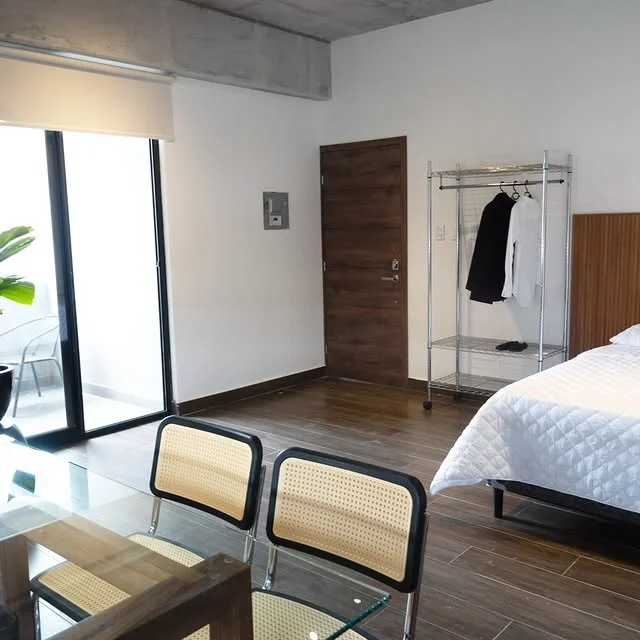
A studio has no hallway, so the front door opens straight into the living room. A small drop zone by the door keeps coats, keys, and shoes from spreading across the whole apartment.
- Hang three hooks at different heights for coats, bags, and dog leads.
- Place a small tray on a shelf for keys, wallet, and sunglasses.
- Use a slim shoe rack or a single row of shoes by the wall.
- Add a small mirror above the hooks for a last check before you leave.
The drop zone works best when it is the first thing you touch coming home and the last thing you touch leaving. Keep it to one square meter and defend it from clutter.
Divider Screen Style
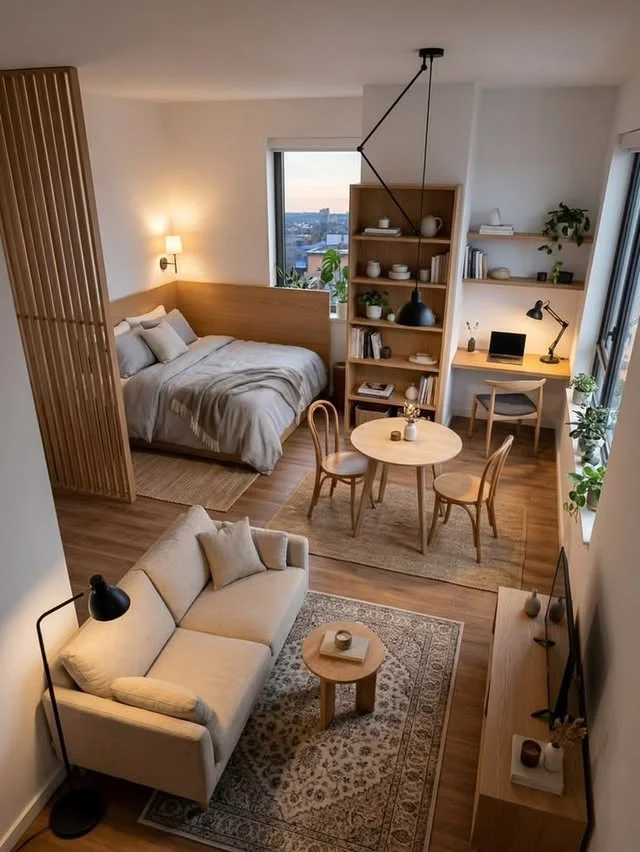
A folding screen is the most flexible divider a studio can own. It opens to hide the bed when guests arrive and folds flat against the wall when the room needs to feel open again.
Before: A bed in full view from the front door, with no boundary between sleeping and living.
After: The same room with a rattan screen beside the bed, and the sleeping corner feels private without losing any light.
Rattan, cane, and slatted wood suit screens best, since they divide the room while letting light through. A solid screen works too, but only if the room has two windows.
Statement Rug Anchor
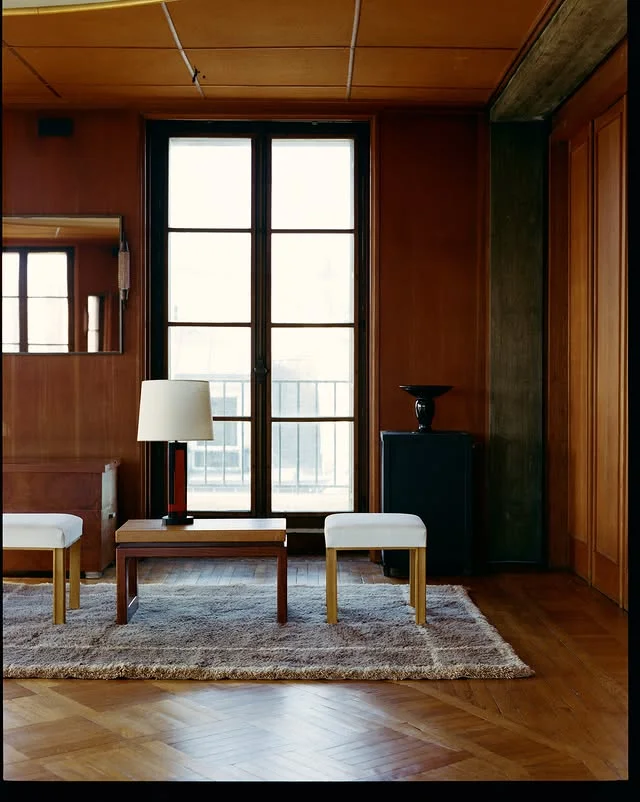
A rug is the fastest way to set the tone of a studio. A bold pattern in the living zone anchors the seating group, hides everyday marks, and lets the furniture stay plain.
Quick Tip: Size the rug so the front legs of every seat sit on it. A rug that is too small makes the furniture look scattered, while one that is too big swallows the floor.
One strong rug is enough for a studio, since a second pattern in the bedroom corner will fight it. Pick a pattern with at least two tones so it bridges the sofa and the bed.
Multifunctional Furniture Picks
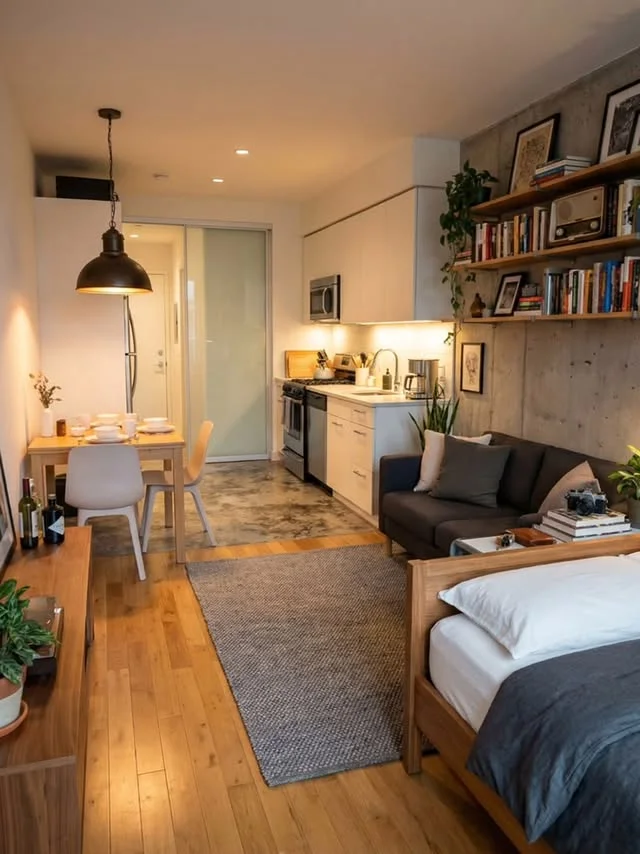
In a studio, every piece of furniture has to earn its floor space twice. A table that is also a desk, a bed with drawers below, or an ottoman that stores blankets all save the space a second piece would take.
- Choose a coffee table with a lift top so it doubles as a desk.
- Pick a bed frame with drawers built into the base.
- Use nesting tables that tuck together when guests leave.
- Buy an ottoman that opens, so seating and storage share one footprint.
Multifunctional pieces cost more than single use ones, so buy one at a time and live with it before adding the next. The right piece pays for itself in floor space.
Gallery Wall Focus
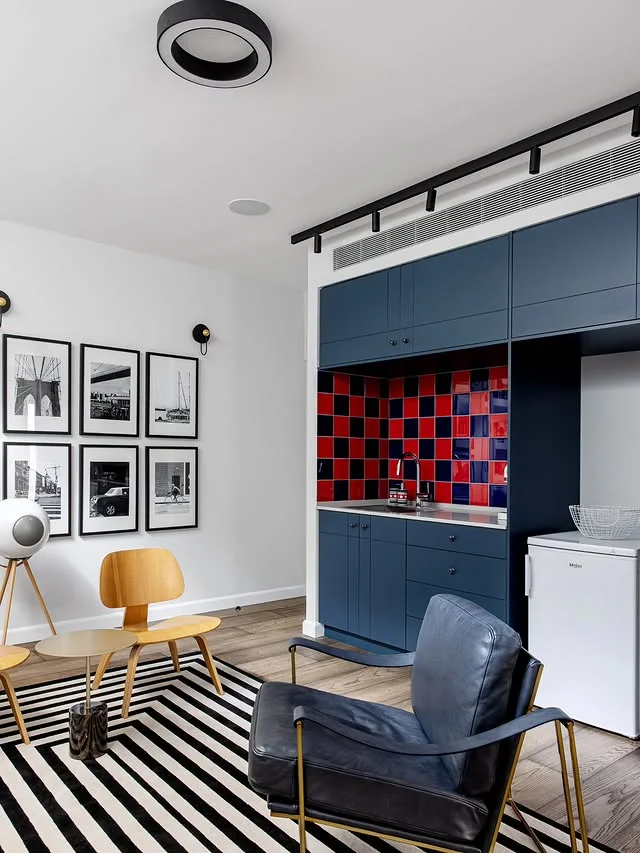
One wall of framed prints can carry a whole studio. Matching frames and a simple grid keep the display calm, even when the pictures themselves are all different.
DO:
- Use the same frame size and the same mount width for every print.
- Hang the grid with equal gaps, about five centimeters between frames.
- Mix photos and prints so the wall feels collected, not bought in one trip.
DON’T:
- Mix black frames with wood or metal ones, it breaks the rhythm.
- Hang the grid so high that the bottom row sits above eye level.
A gallery wall suits the wall opposite the bed, where you see it first thing in the morning. Start with six frames and add one at a time.
Open Shelving Displays
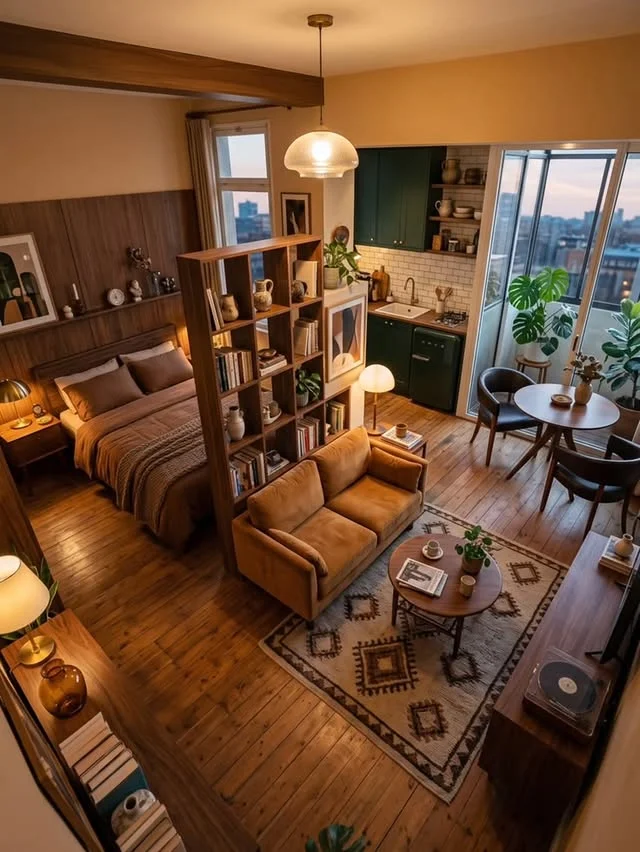
Open shelves turn everyday objects into decoration, and they suit a studio because they store and display at the same time. Books, plants, and a few favorite objects are all a shelf needs.
- Group objects in odd numbers, three or five, never in pairs.
- Leave breathing room between groups so each one reads clearly.
- Mix books with one vase or plant per shelf for balance.
- Keep the top shelf for light objects and the bottom for heavy ones.
Open shelves need editing more than closed cupboards do, since everything is visible. If a shelf looks crowded, remove one thing before you add anything.
Reading Nook Corner
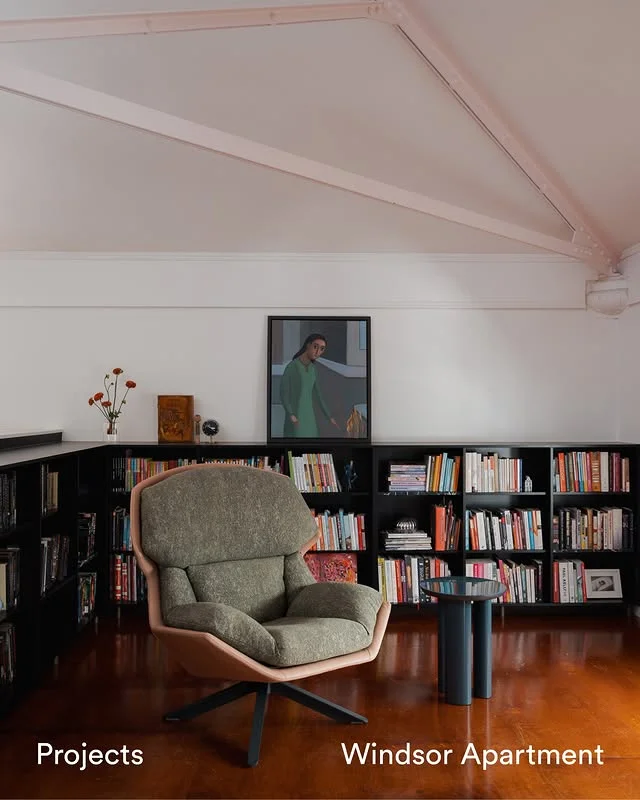
A reading nook is the coziest seat in a studio. One good armchair, a floor lamp, and a small stack of books make a corner that works for slow mornings and long evenings alike.
Cost: A comfortable armchair runs 200 to 500 dollars; a floor lamp adds 40 to 100 dollars, and a small side table 30 to 80 dollars.
Time: An afternoon to place the chair, the lamp, and the books, and the corner is ready the same day.
Put the chair where the daylight falls, since a reading corner needs real light. A bookshelf within arm’s reach is the difference between a chair and a nook.
Bold Color Moments
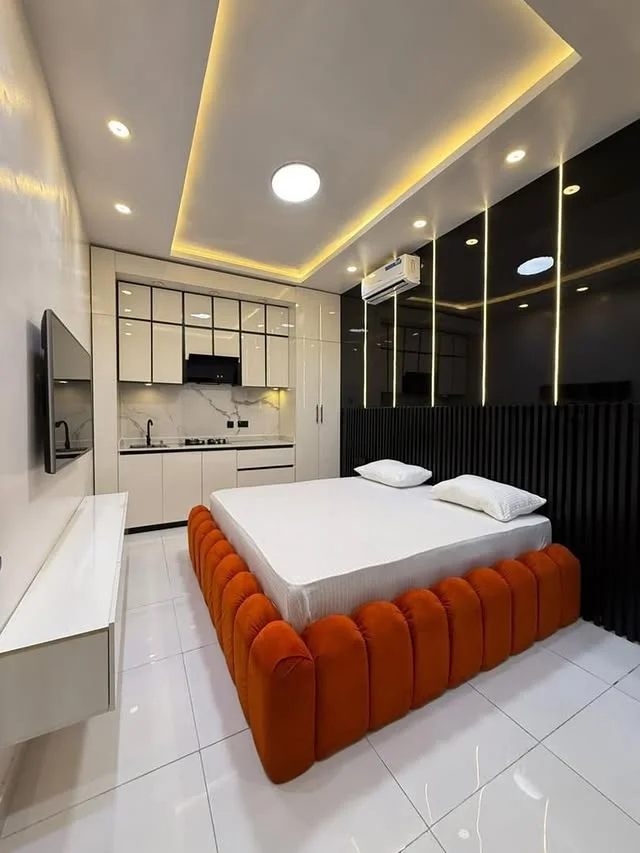
A pale studio can take one bold color, and one is enough. A single strong accent, such as a bright artwork, an orange bedspread, or a deep green wall, gives the whole room a focal point while the rest stays quiet.
- Pick one accent color and use it in three places: art, a cushion, and a throw.
- Keep the accent to about ten percent of the room.
- Use the same accent in the bedroom corner so the zones feel joined up.
- Change the accent with the seasons, since a cushion costs less than a sofa.
Bold color suits a studio because the room is small enough that one accent reaches everywhere. If the color feels too loud after a week, soften it with a pale throw.
Mezzanine Level Living
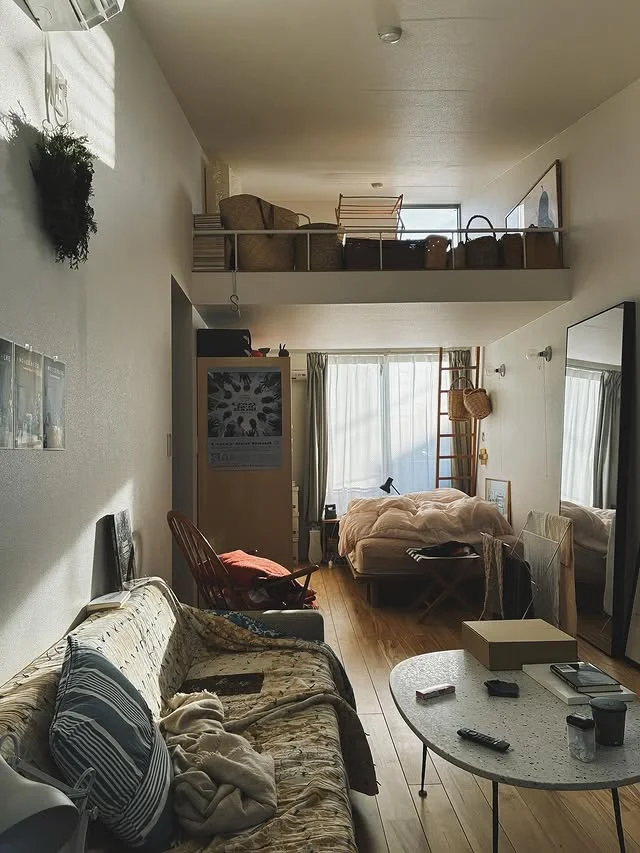
A mezzanine level is the boldest way to double a studio. A raised platform holds the bed above, and the space below becomes a living room, a workspace, or a wardrobe, all without extending the walls.
DO:
- Check the ceiling height first, you need standing room below and sitting room above.
- Add a proper rail or wall on the open edge, safety comes before style.
- Use the space below for the quietest zone, such as the desk or the reading chair.
DON’T:
- Build a mezzanine in a rented flat without written permission.
- Put the kitchen below a sleeping platform, steam and smells rise.
A mezzanine is a bigger job than a loft bed, so price it before you commit. In a tall studio it adds real value, and it makes the smallest flat feel like two rooms.
Cozy Bedroom Corner
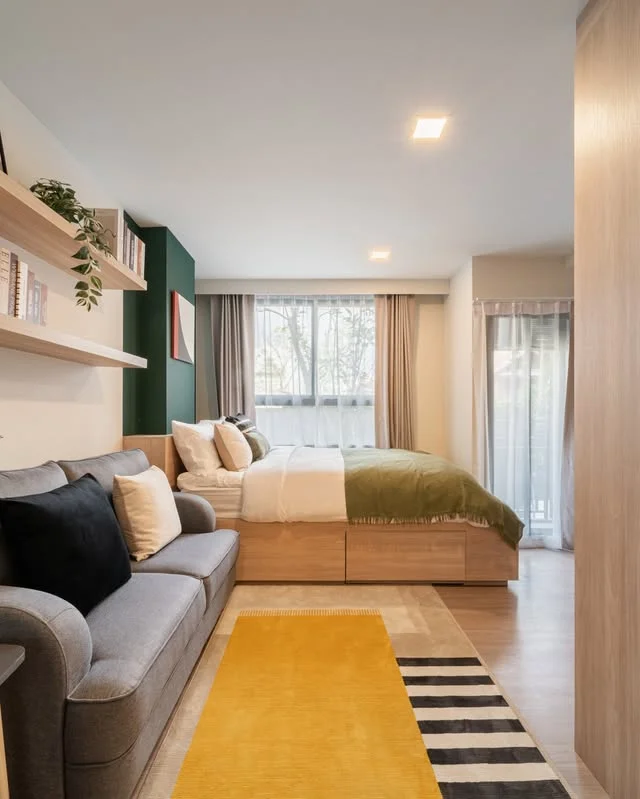
The bedroom corner of a studio deserves the same care as a full bedroom. Soft light, layered bedding, and one warm detail can make a corner of a shared room feel like a private retreat.
Before: A bare mattress against the wall with a single flat pillow, lit by the ceiling light, feeling like a waiting room.
After: The same corner with layered bedding, fairy lights along the wall, and a small shelf for a book and a glass of water, and the corner becomes the room’s softest spot.
Keep the bedroom corner the calmest part of the room. One warm lamp and a soft throw do more than any gadget, and both cost almost nothing.
Personal Touches Finish
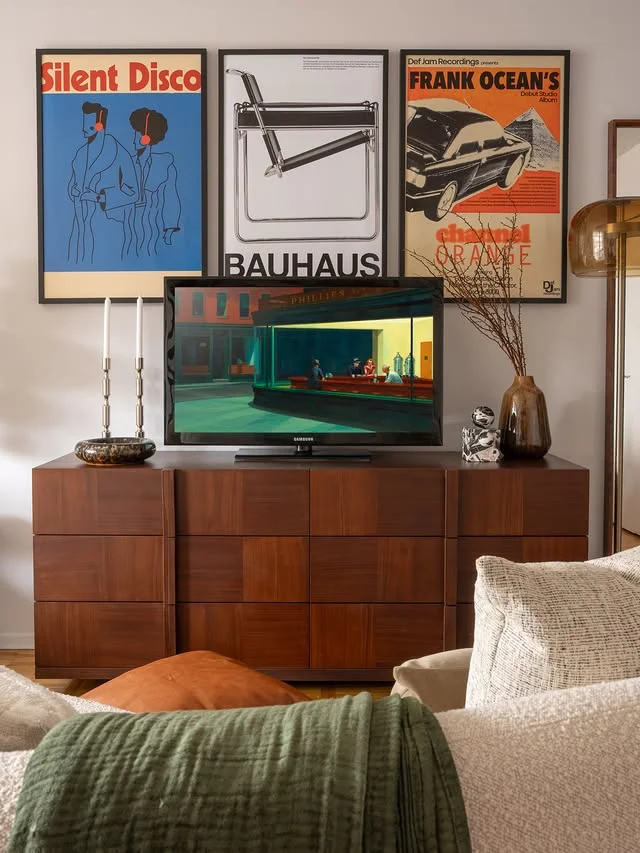
A studio should look like the person who lives there, not a showroom. One neon sign, a favorite poster, or a shelf of travel finds gives the room a story that no furniture set can buy.
- Pick one personal piece per zone, so the room feels collected, not decorated.
- Frame one photo that matters instead of filling the wall with prints.
- Display one object from a trip or a hobby where you see it daily.
- Rotate the personal pieces with the seasons to keep the room feeling alive.
Personal touches are the last step for a reason: they only work once the practical pieces are in place. Add them slowly, and let the room grow into its owner.
Conclusion
These 25 ideas share one habit: give every zone a clear job, then keep the rest simple. A divider, a loft bed, or a well placed shelf can change how the whole room feels, and the small comforts finish it. That is the heart of good studio apartment ideas: a small space, used with care, that still feels like home.
For more inspiration, explore these related guides: bedroom zone ideas and dreamy studio decor.