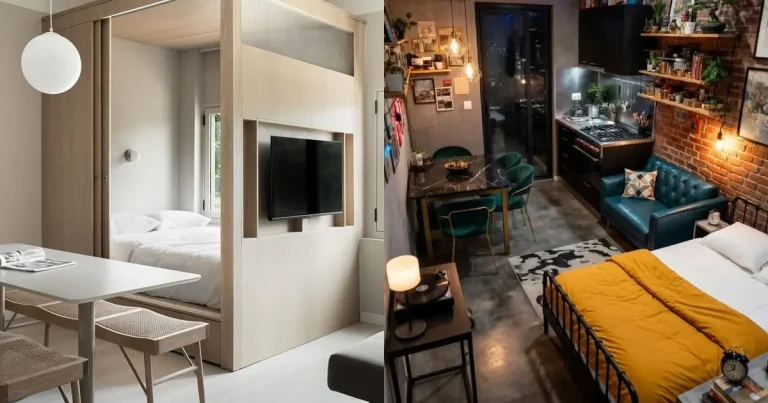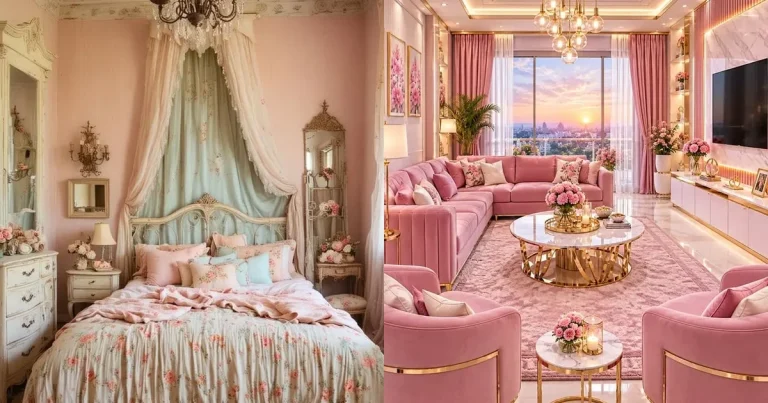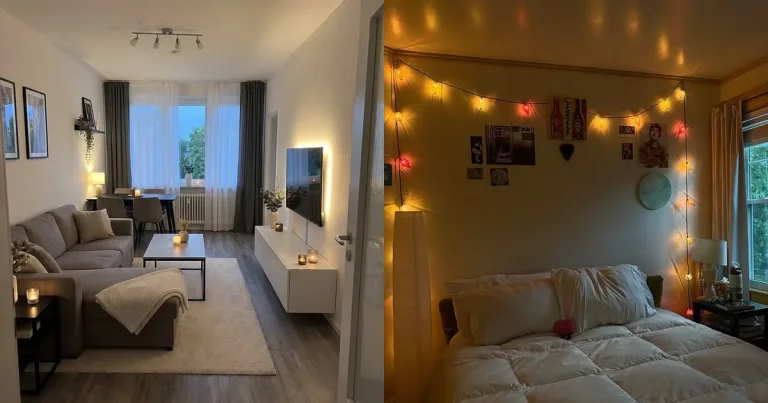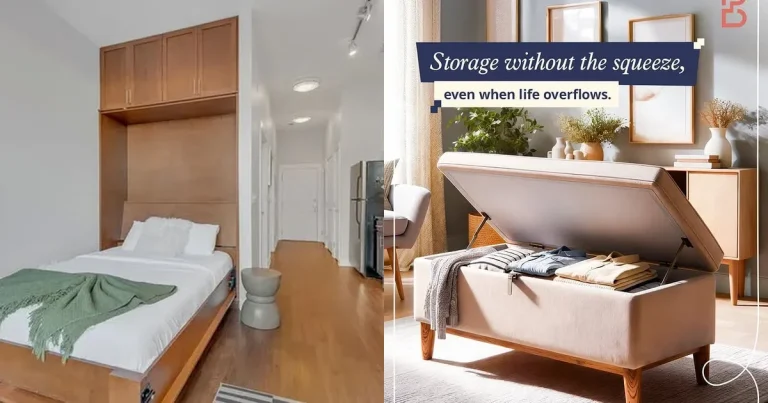
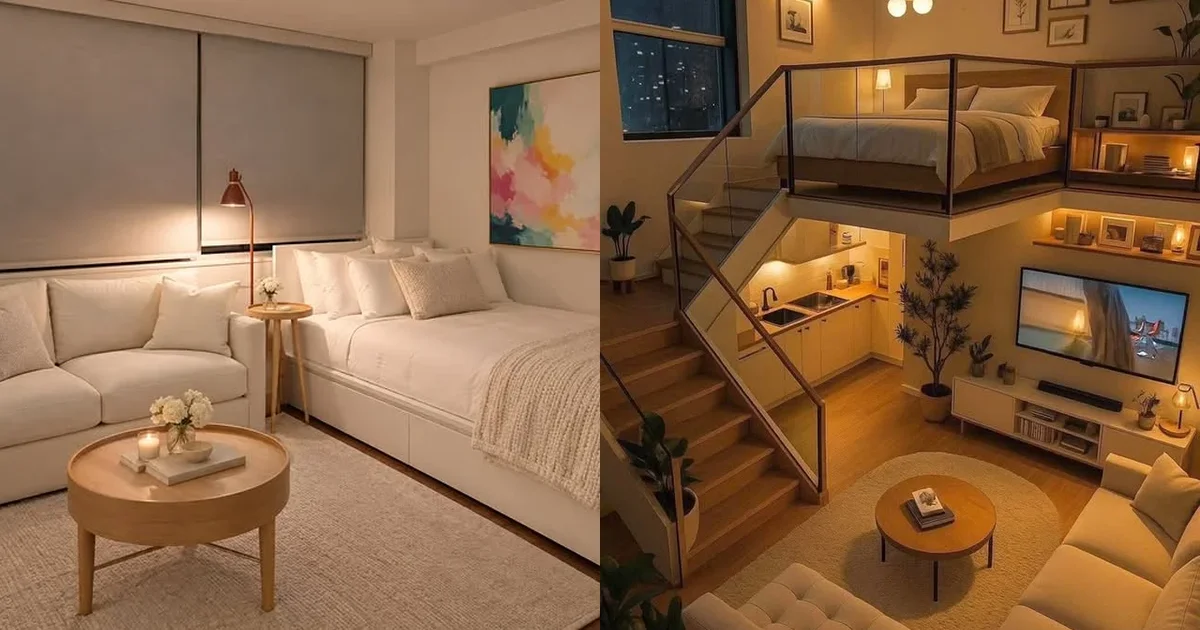
23 Inspiring Studio Apartment Ideas Worth Saving Today
A studio apartment gives you one room to do everything in, so every choice has to work twice as hard. The bed, the sofa, the desk and the kitchen all share the same floor, and the difference between a cramped room and a calm one is usually a handful of smart decisions.
These 23 ideas are the best studio apartment inspiration I found for small spaces, from zoning tricks and fold-down furniture to lighting and storage that hides in plain sight. Pick one idea or layer several together, and the same small room starts to feel like a proper home.
Open Layout Flow
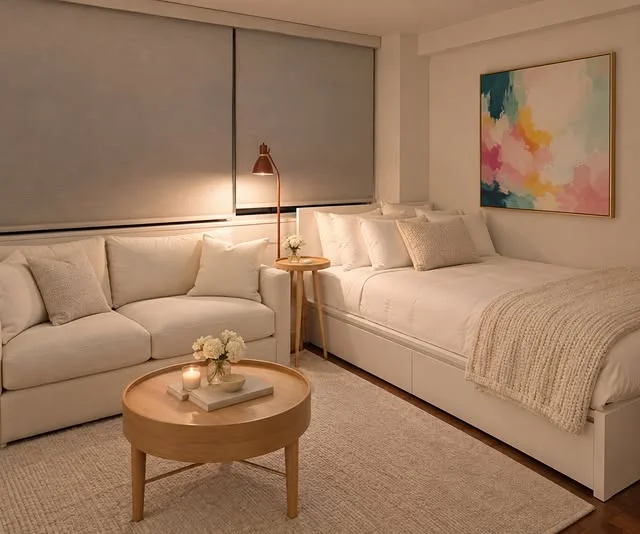
An open layout works when you can see from the door to the window without furniture blocking the way. Keep the biggest pieces against the walls, leave the middle of the room clear, and let one rug mark the living area so the eye reads the room as a single space.
- Push the sofa against the longest wall, not across the middle of the room.
- Keep walkways at least 75 centimeters wide so the room never feels tight.
- Use one rug for the living zone and leave the rest of the floor bare.
- Choose low furniture near the window so daylight reaches the whole room.
This kind of studio apartment inspiration starts with the floor plan, not the shopping list, so sketch the layout on paper before you buy anything.
Zoned Sleeping Nook
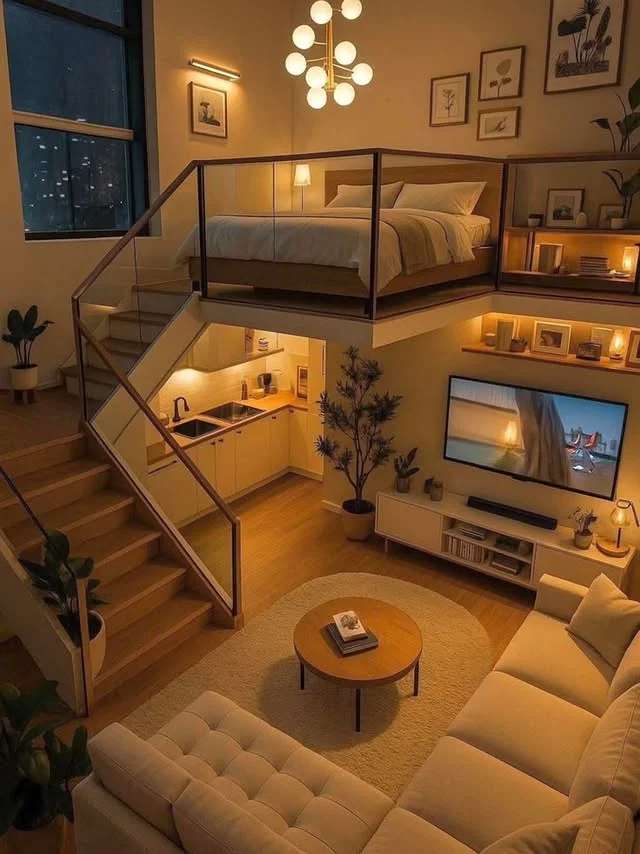
A mezzanine level turns the bed into a room of its own, even when there is no wall. The bed sits on a raised platform behind glass railings, with a staircase leading up, and the kitchen and living area use the floor below, so one room works on two levels.
- Use glass railings on the mezzanine so light still reaches the bed.
- Put the kitchen or the living area below the sleeping level, not a second bed.
- Keep a small shelf and a wall light up top so the mezzanine works as a reading spot too.
- Add a handrail to the staircase, since you will climb it half asleep.
A zoned nook also helps you sleep better, since the bed stops being the first thing you see from the sofa.
Floating Shelf Walls
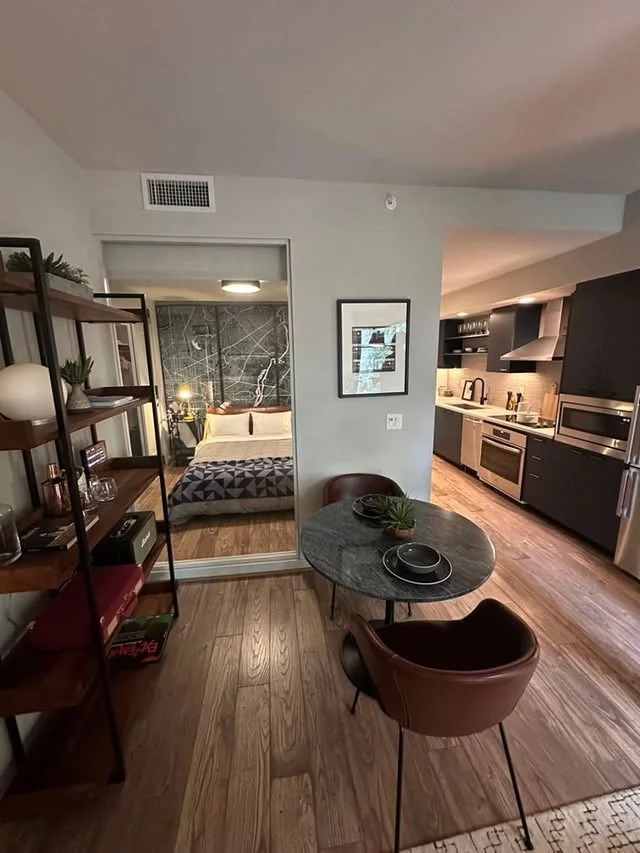
Floating shelves put storage on the wall instead of the floor, which is the one place a studio has to spare. A tall open unit beside the sofa holds books, plants and barware without taking a single step of floor space.
Quick Tip: Hang the lowest shelf at shoulder height so everyday items stay in reach, and keep the top shelves for things you only need once a week. A shelf that is too high becomes decoration, not storage.
Group items in threes and leave a third of each shelf empty, so the wall looks styled rather than stuffed.
Fold-Down Desk Setup
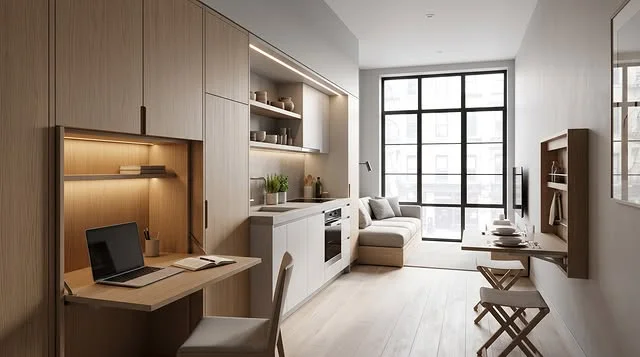
A fold-down desk is the best seat in a studio that has no room for a home office. It folds flat against the wall when the workday ends, and the same wall can hold a fold-down dining table on the other side of the room, as this narrow apartment shows.
DO:
- Mount the desk at proper sitting height, about 75 centimeters from the floor.
- Add a wall lamp above it so you are not working in your own shadow.
- Keep a chair that folds or stacks, so it disappears with the desk.
DON’T:
- Hang the desk where it blocks a walkway when it is down.
- Load it with heavy monitors, a laptop is the right weight for a folding desk.
A fold-down desk costs less than a basic table, and it gives the room back its floor every evening.
Light Color Palette
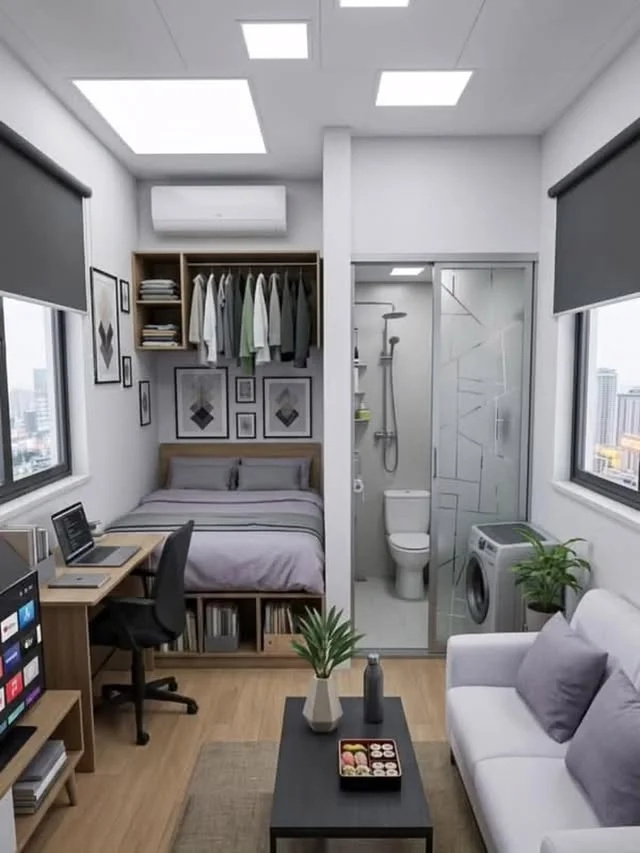
Pale walls and light furniture make a small room feel bigger, because the eye travels further before it hits a dark surface. White, cream and pale wood do most of the work here, with a gray sofa as the only mid-tone in the room.
- Paint the walls and ceiling the same pale shade so the corners disappear.
- Choose a light rug, since a dark rug cuts the floor in half.
- Add one mid-tone piece, such as a gray sofa, so the room has depth.
- Keep the wood pale too, since dark wood shrinks a small room.
Light colors also bounce daylight around the room, so a north-facing studio feels brighter without a single extra lamp.
Mirror Placement Tricks
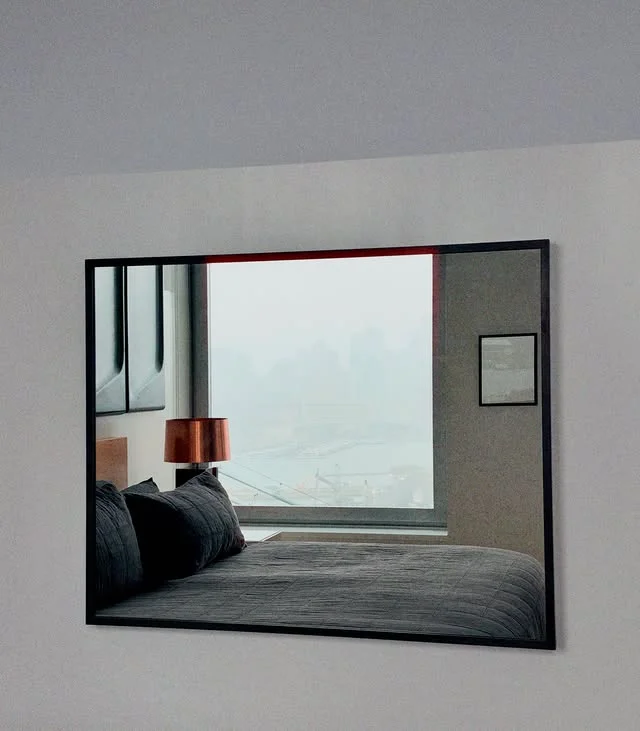
A large mirror does two jobs in a studio: it doubles the light and it makes the wall behind it look like another room. The rectangular mirror in this photo reflects the bed and the window, so the bedroom feels twice its real size.
- Hang the mirror opposite a window, not beside it, so it catches the most light.
- Lean a tall mirror against the wall if you rent, since it needs no holes.
- Keep the mirror at eye level, with its center about 150 centimeters from the floor.
- Place one mirror near the door so the entry feels wider.
One large mirror beats three small ones, since a single clean reflection reads as space and a scattered set reads as clutter.
Multi-Use Furniture
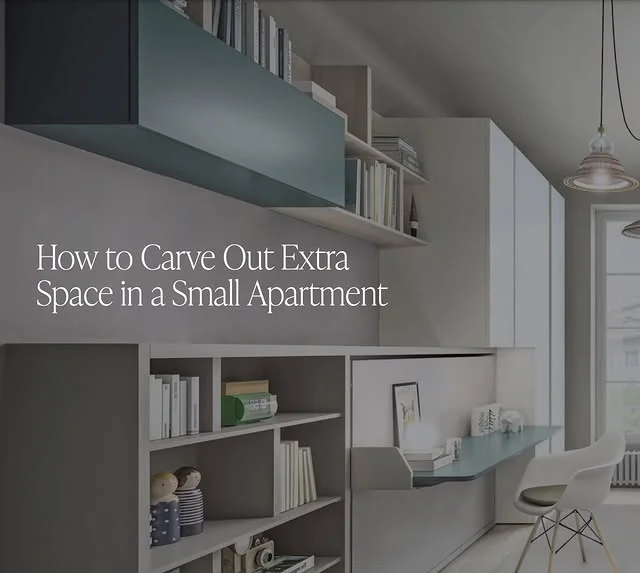
Every piece in a studio should do at least two jobs. A storage ottoman is a seat, a table and a cupboard; a daybed is a sofa by day and a bed by night; a shelving unit with cabinets below hides the clutter it displays above.
Quick Tip: Before you buy a piece, name its two jobs out loud. If you can only name one, it has to earn its floor space some other way, such as folding flat or rolling away.
Multi-use furniture costs more per piece, but you buy fewer pieces, so the room ends up cheaper and calmer.
Cozy Reading Corner
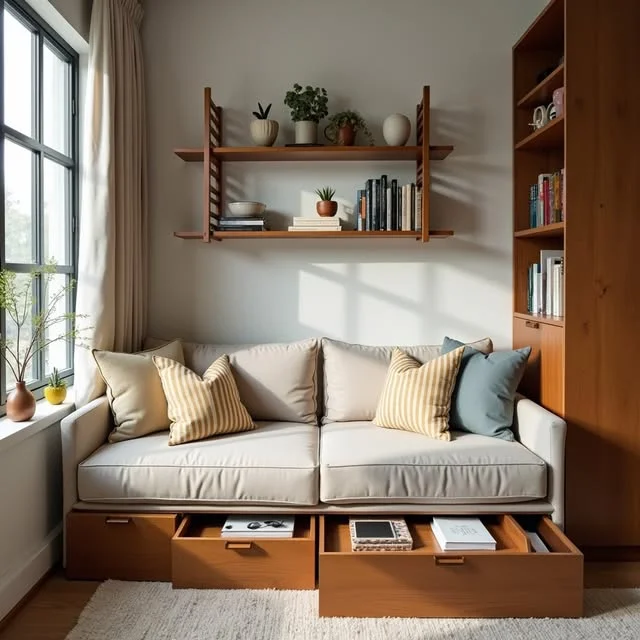
A reading corner needs only three things: a comfortable seat, good light and a place for a book. This sunlit corner pairs a beige sofa with floating shelves above it, so the books are in reach and the plants soften the wall.
- Put the chair where daylight falls in the morning, since reading light matters most then.
- Add a floor lamp behind the chair for evening reading.
- Keep a small side table or a shelf within arm’s reach for a mug and a book.
- Use a soft throw so the corner invites you to sit down.
A reading corner also gives the studio a quiet zone, which matters when the whole apartment is one room.
Hidden Storage Ideas
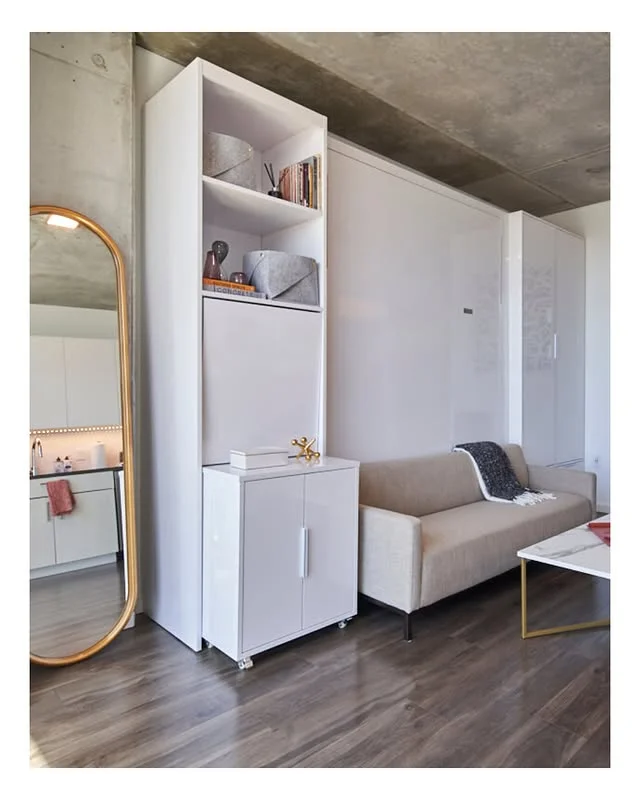
Hidden storage is what keeps a studio looking calm, since the clutter has somewhere to go. This tall white unit hides clothes and supplies behind flat cabinet doors, with open shelves on top for the few things worth showing.
DO:
- Use flat-front cabinets, since handles and knobs catch the eye in a small room.
- Store daily items at waist height and seasonal items up high.
- Label the inside of each door so the system survives a busy week.
DON’T:
- Fill open shelves to the edge, since crowded shelves look like clutter.
- Buy storage before you sort, since you will store things you should have thrown out.
The best hidden storage is the kind guests never notice, and the kind you can open with one hand while holding a coffee.
Plants for Freshness
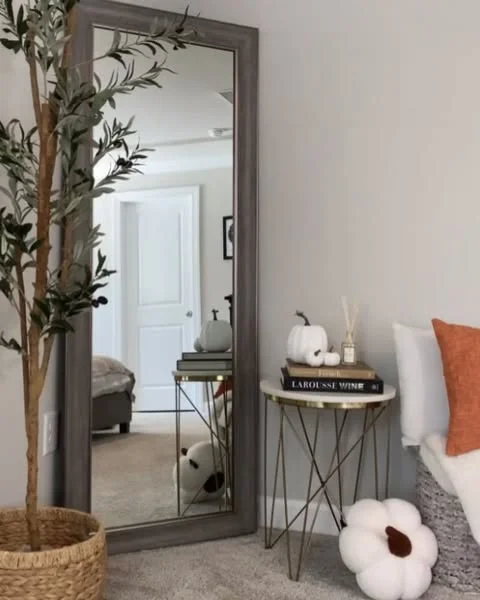
Plants are the cheapest color a studio can buy. Green against pale walls looks fresh without trying, and a tall olive tree beside a mirror breaks up the straight lines of the furniture while cleaning the air.
- Start with one large plant, such as an olive or fiddle-leaf fig, and live with it for a month.
- Put small plants on shelves and windowsills, not on the floor where they get kicked.
- Use matching pots in one material so the plants read as a set.
- Water on a schedule, since a dead plant is worse than no plant.
If real plants keep dying, a good faux olive tree does the same job and needs nothing but an occasional dust.
Warm Lighting Layers
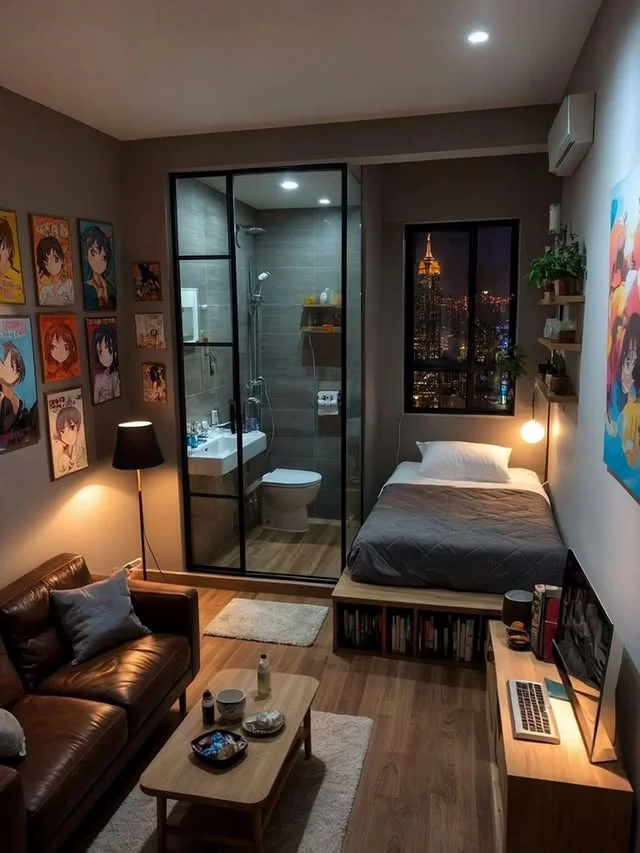
A studio needs more light than a bigger home, because one ceiling light leaves dark corners everywhere. Three layers work best: a pendant over the seating area, a floor lamp by the sofa, and a small table lamp for reading.
- Use warm white bulbs, around 2700K, in every fitting.
- Put the main light on a dimmer so the room works for dinner and for movies.
- Place a floor lamp behind the sofa arm, not in front of it.
- Add candles on the coffee table for evenings when the room should feel soft.
Light is the cheapest way to fix a studio that feels dull. Change the bulbs first, then add one lamp, and only then think about repainting.
Room Divider Ideas
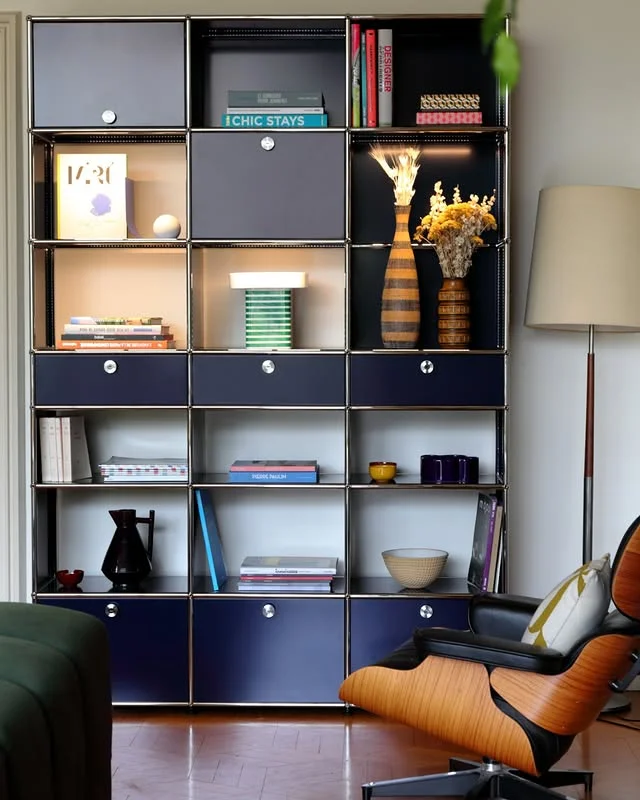
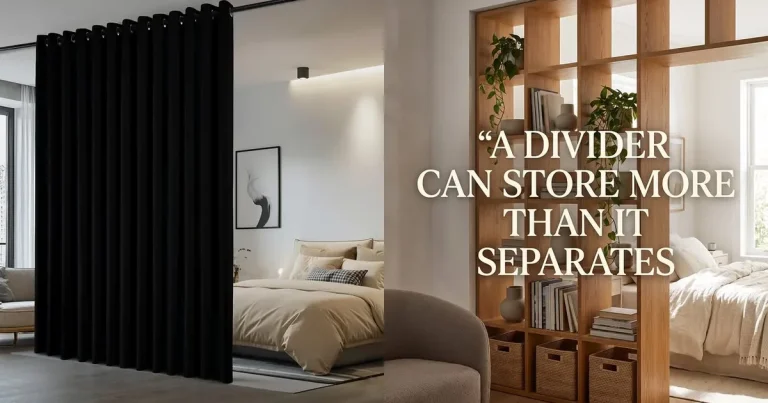
A divider gives a studio the privacy of a second room without building a wall. This tall open shelving unit stands between the sleeping area and the living area, and because you can see through its open cubes, the light still flows across the room.
Before: A bed in full view of the front door, with no boundary between sleeping and living, so the whole apartment feels like one messy room.
After: The same room with a tall divider, and the bed becomes a private corner while the living area keeps its light and its view of the window.
Curtains, open shelving and tall plants all work as dividers too, so pick the one that matches the room and the budget.
Compact Kitchen Styling
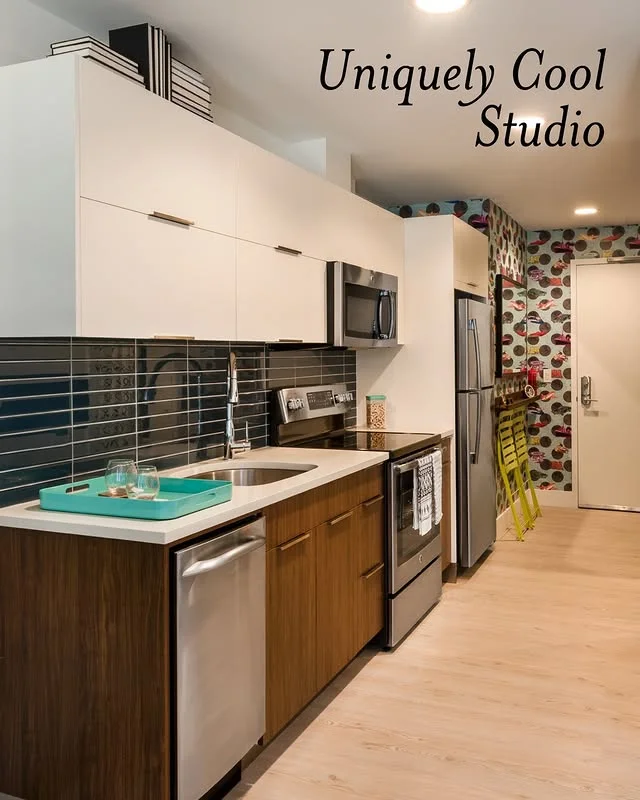
A studio kitchen has to cook, store and serve in a few square meters, so every surface earns its place. White upper cabinets keep it bright, dark wood below grounds it, and a single open shelf holds the dishes you reach for daily.
- Keep the counter clear except for one or two daily items, such as a kettle and a chopping board.
- Use the wall above the counter for a rail with hooks for utensils.
- Choose a small sink and a two-burner cooktop if the kitchen is also a walkway.
- Store bulky appliances in a cabinet and bring them out only when you cook.
A compact kitchen works best when it looks like part of the living room, so match its colors to the rest of the studio.
Textured Soft Furnishings
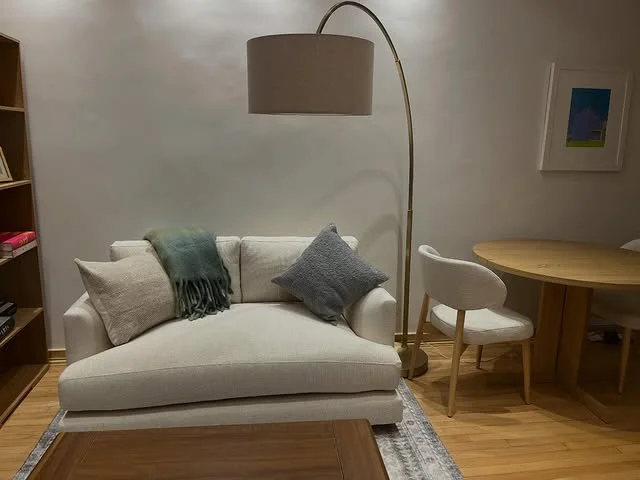
Texture is what stops a pale studio from feeling flat. This beige two-seat sofa mixes textured throw pillows with a fringed blanket in green and blue, and the arched brass floor lamp beside it adds a warm metal line to the room.
Quick Tip: Mix three textures in one seating area, such as wool, linen and rattan, and keep the colors within one pale family. The contrast comes from the materials, not from the palette.
Soft furnishings are also the easiest things to change, so they are the right place to try a new color before you commit to paint.
Gallery Wall Display
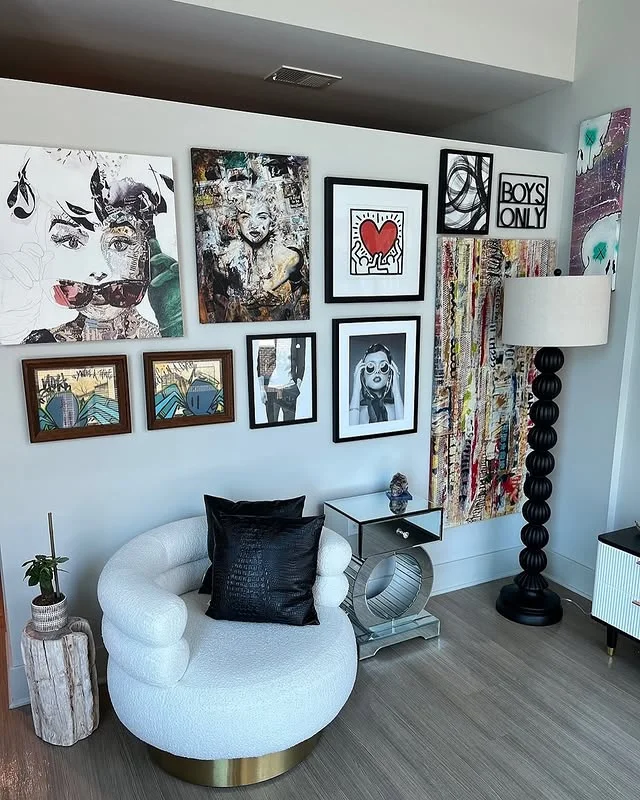
A gallery wall is the fastest way to make a rented studio feel like yours. Framed art above a chair turns a blank wall into a personal display, and because the frames match, the wall reads as one piece rather than a jumble.
- Use the same frame color for every piece, and vary the sizes instead.
- Hang the center piece at eye level and build out from it.
- Mix art with one or two photos so the wall feels collected, not bought in one trip.
- Leave equal gaps of about five centimeters between frames.
Start with five or six frames and add one at a time, since a gallery wall grows better than it is planned.
Under-Bed Storage
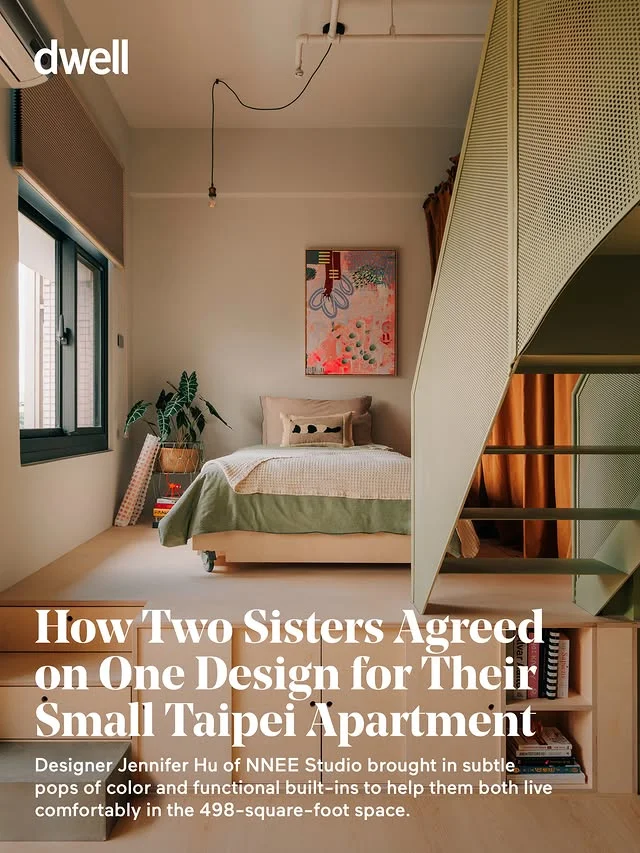
The space under the bed is the biggest cupboard a studio owns, and a raised platform bed makes it easy to use. Drawers or boxes under a platform bed hold bedding, out-of-season clothes and anything else the closet cannot fit.
DO:
- Use flat boxes with lids so dust stays out and the contents stay visible when you lift them.
- Store the heaviest items nearest the wall, where they are easiest to slide.
- Vacuum under the bed once a month so the storage stays clean.
DON’T:
- Push loose items under the bed without boxes, since they slide out of reach.
- Store anything damp under the bed, since it will smell within weeks.
A platform bed costs little more than a basic frame, and the storage it adds is worth a whole chest of drawers.
Bold Accent Wall
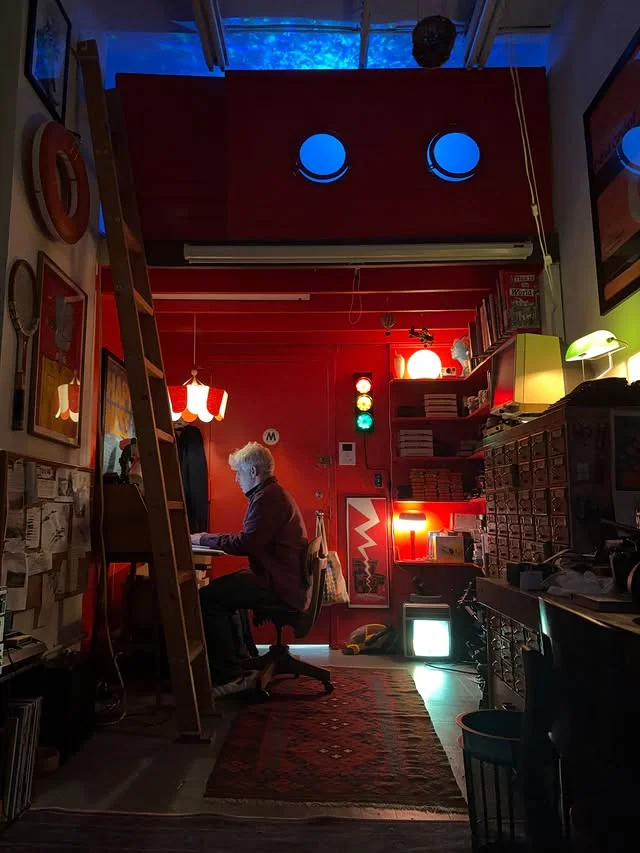
One bold wall does the work of a whole redecoration. Deep red paint, round windows and warm lamps turn this small room into a space with a clear personality, and the dark wall makes the pale furniture around it look brighter.
- Paint the wall you face when you sit down, so the color is the first thing you see.
- Keep the other walls pale so the bold wall stays the star.
- Repeat the accent color once in a cushion or a rug so the wall feels planned.
- Use a matte finish, since gloss shows every mark on a dark wall.
A bold wall is a weekend job that changes how the whole room photographs, and paint is the cheapest makeover there is.
Slim Dining Setup
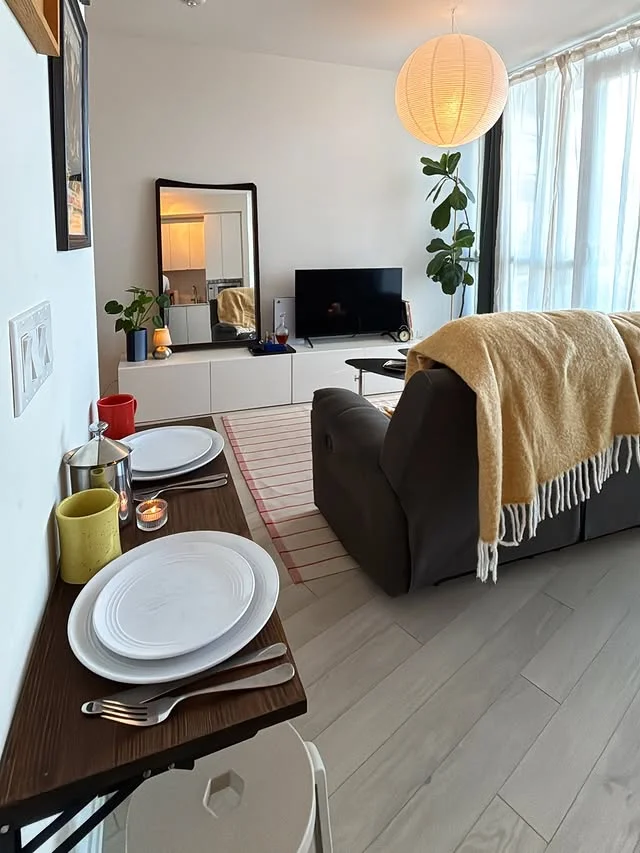
A studio dining table should seat two comfortably and disappear when it is not needed. This narrow wooden table set for two sits against the wall with colorful mugs and plates, and it doubles as a desk on workdays.
- Choose a table no wider than 60 centimeters so it never blocks the walkway.
- Use chairs that tuck fully under the table when dinner is over.
- Hang one pendant light above the table so meals feel like an occasion.
- Keep the table set simply, since a crowded table shrinks the room.
If even a slim table is too much, a wall-mounted fold-down table gives you a dining spot that vanishes after dinner.
Green Wall Shelves
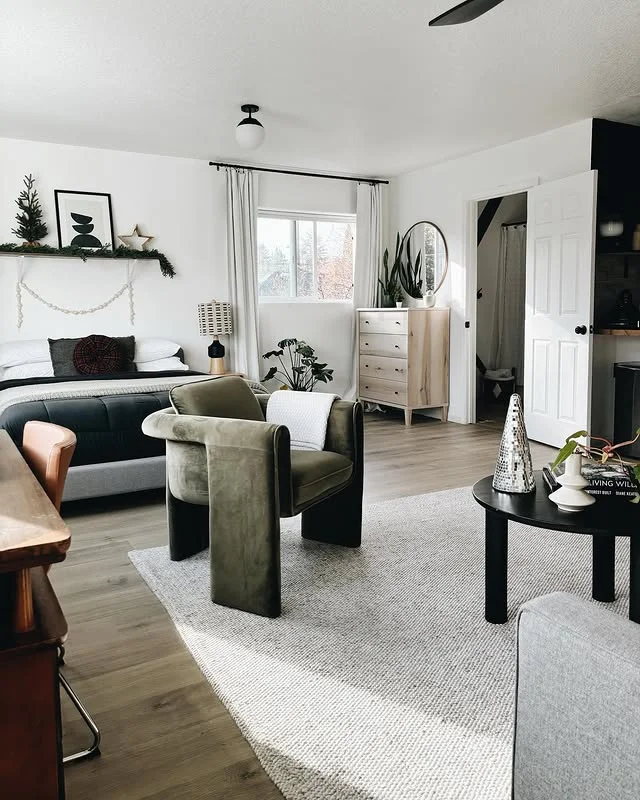
A wall shelf with trailing greenery brings the garden indoors without taking any floor space. The shelf above this bed holds plants that soften the wall, and the green leaves tie the bedding and the wood frame together.
Quick Tip: Pick trailing plants, such as pothos or ivy, for high shelves, since they grow down and soften the edge of the shelf. Water them in place with a long-spout can so you never have to take them down.
Green shelves work in any room of the studio, from the kitchen wall to the space above the sofa, so start with one shelf and add more where the light is good.
Smart Entryway Zone
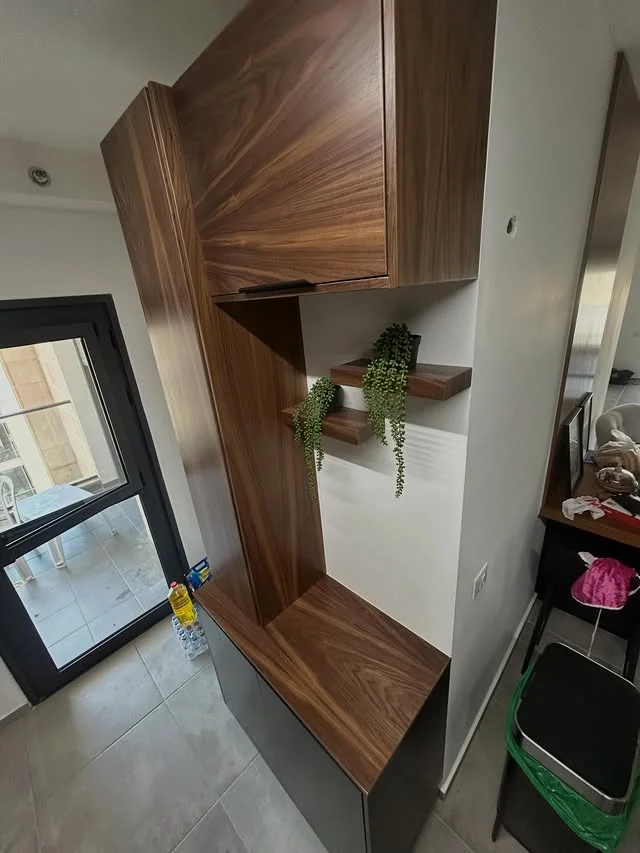
A studio has no hallway, so the entry needs a zone of its own. This floor-to-ceiling walnut unit holds coats, shoes and bags behind dark wood doors, with a low bench that doubles as a seat for putting shoes on.
- Give the entry a rug or a mat so the zone reads clearly from the door.
- Add hooks at two heights, one for coats and one for bags and keys.
- Put a small bench or stool by the door for shoes.
- Keep a tray by the door for keys, mail and anything you grab on the way out.
An entry zone also keeps the rest of the studio tidy, since coats and shoes stop migrating to the sofa and the bed.
Layered Rug Styling
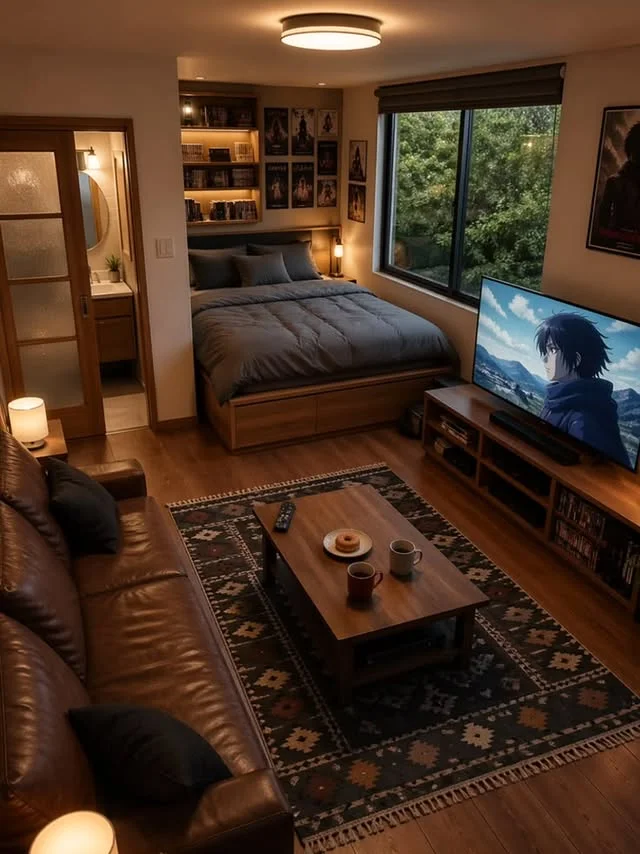
Layered rugs add warmth and pattern without a single new piece of furniture. A patterned rug under the coffee table and a smaller flat rug beneath it give the seating area depth, and the layers hide wear better than one rug alone.
DO:
- Size the bottom rug so the front legs of every seat sit on it.
- Mix one pattern with one solid rug so the layers do not fight.
- Use a rug pad under the top layer so nothing slides.
DON’T:
- Layer two bold patterns, since the floor becomes the loudest thing in the room.
- Let rug edges curl up, since they trip everyone who walks past.
Rugs are the one decor piece you can change in an afternoon, so they are a good place to try a bolder pattern.
Personal Touches Display
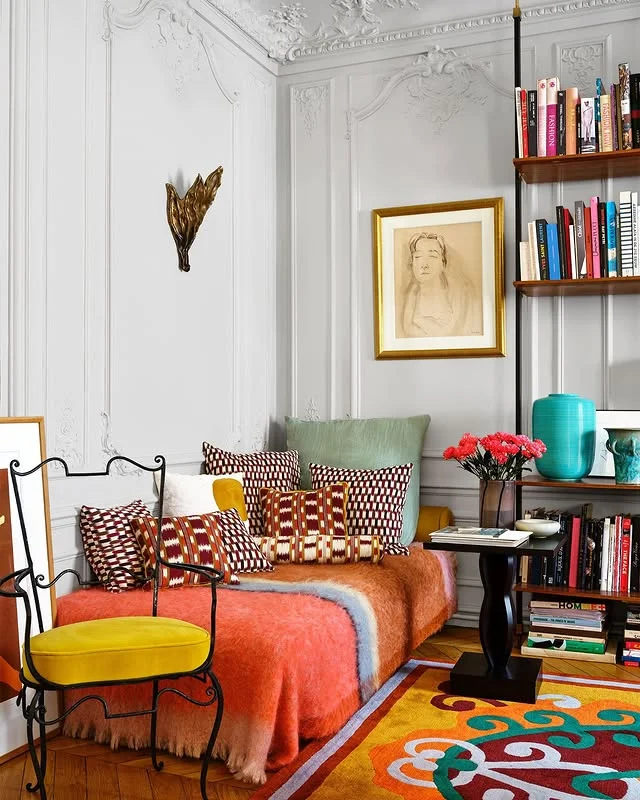
Personal touches are what turn a styled studio into your home. Patterned pillows, a daybed with a coral throw, ornate wall paneling and the objects you actually love make the room feel collected over years, not bought in a weekend.
- Display the things you use and love, not things you bought to fill a shelf.
- Group small objects in odd numbers, three or five, so they read as a display.
- Rotate the display with the seasons so the room never feels stale.
- Keep one surface clear, since a room with no empty space feels crowded.
A studio shows everything you own, so choosing what to display is the same as choosing how the room feels.
Calm Evening Ambience
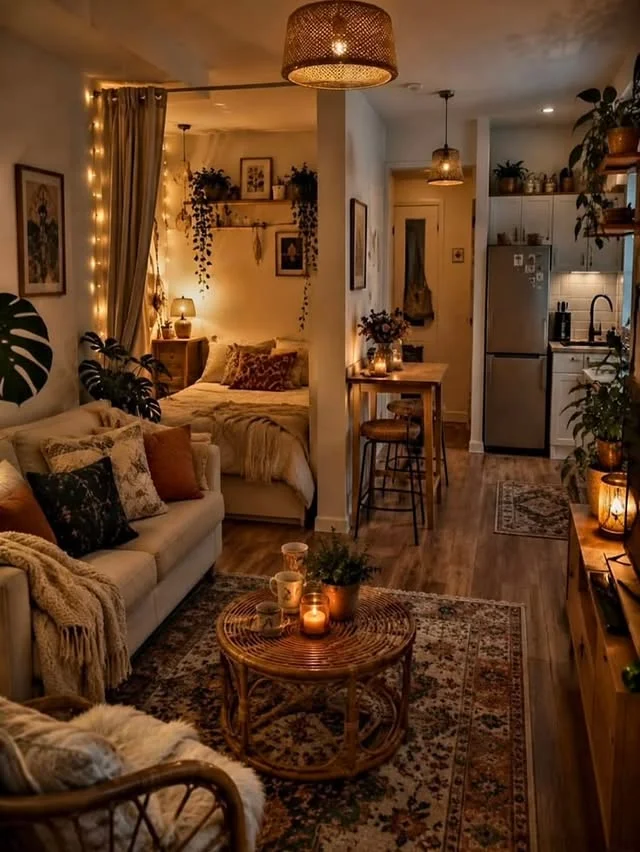
Evenings are when a studio earns its keep, and the mood comes from light, not from furniture. Warm lamps, candles and low light turn the same small room into a calm retreat after a long day.
- Switch off the ceiling light after sunset and use lamps only.
- Light two or three candles on the coffee table for a soft glow.
- Close the curtains so the room feels enclosed and private.
- Keep a soft throw on the sofa so the evening seat is always ready.
A calm evening needs no new furniture, only a change of light, and that is the cheapest idea on this list.
Conclusion
These 23 ideas share one habit: let every piece earn its place, and let the small room do more with less. A clear layout, a zoned bed, hidden storage and warm light are enough to turn one room into a home that works morning and night.
If you want more studio apartment inspiration, start with the two guides below, then pick one idea from this list and try it this weekend.
For more inspiration, explore these related guides: bedroom zone ideas and dreamy studio apartment decor.